
Residential Helical Piers and Piles
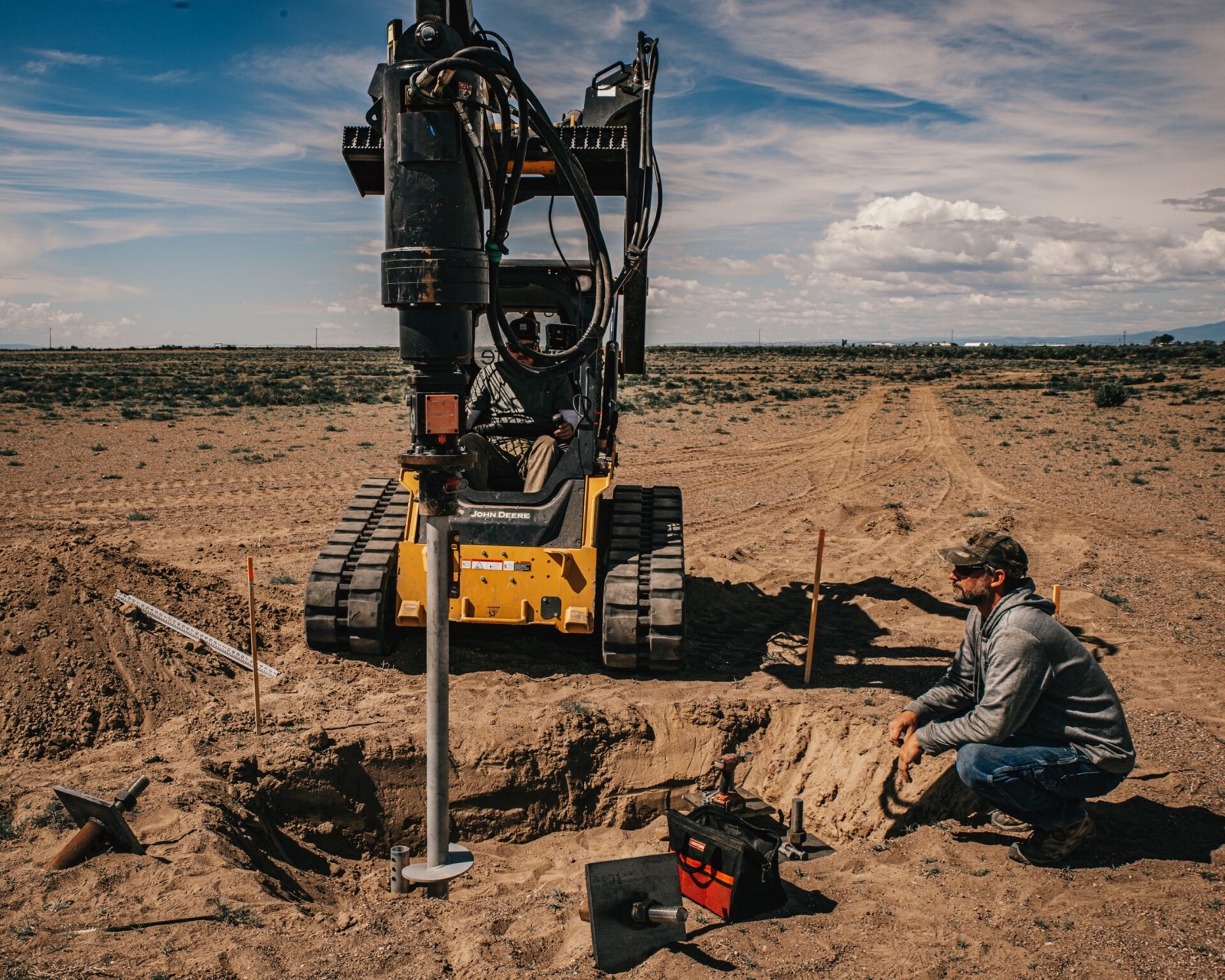
Site Safe Helical Piers installs residential helical piers and piles for new homes, additions, ADUs, decks, porches and garages in Denver. Each pile goes to the depth and torque on your engineer’s drawings, and you get the installation log for every pile.
Residential projects we build on piles
New homes
Helical piers for a new house are screwed in to a design depth and torque, then capped and tied into the concrete foundation. The house sits on the piles, and the piles bear in deeper, steadier ground below the swelling clay. Read helical piers for new construction.
Home additions
An addition needs its own foundation next to the existing house. Compact rigs fit the side yards, alleys and backyards where additions go, and a pile can carry load as soon as it is accepted. See helical piers for home additions.
ADUs
Denver reviews an ADU’s foundation with the building permit, and the ADU must be built by a licensed contractor. On swelling clay or a tight alley lot, helical piles with a grade beam cut the digging and spoil. Read our ADU foundation guide.
Decks and porches
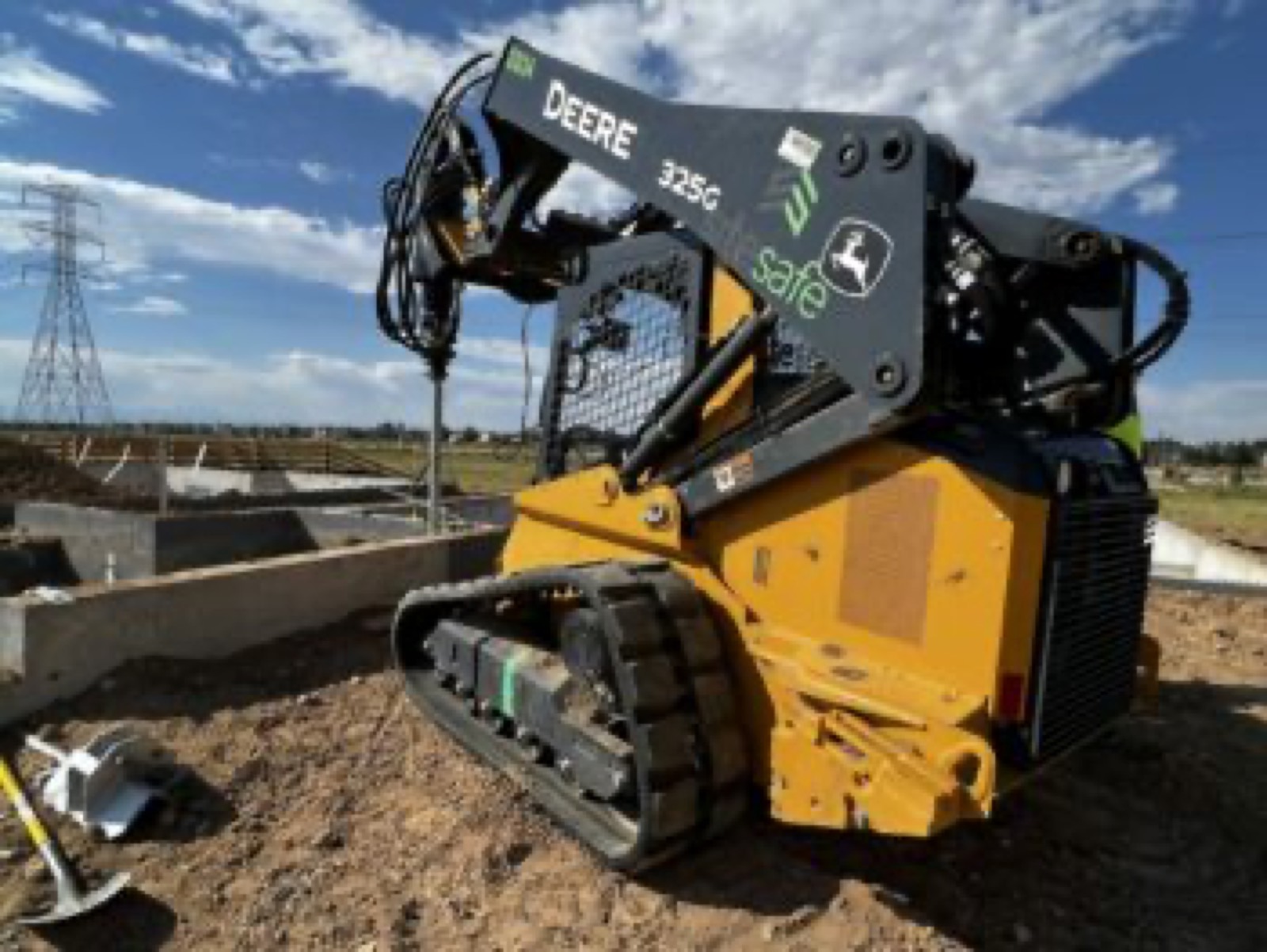
Helical piles go below Denver’s 36-inch frost line into firm soil with minimal digging, and framing can start the same day. We set the piles; your deck builder frames on top. See helical piles for decks, deck footings without digging and what deck piles cost.
Garages and sheds
A detached garage can sit on helical piles under a concrete grade beam, with the floor slab poured inside the beam. A small shed may be exempt from frost depth, and on flat, open ground a gravel pad is often the cheaper option. See garage foundation types and screw pile shed foundations.

Who does what on a residential job
Your engineers design the foundation, we install and log the piles, and your other trades build on top.
- Your geotechnical engineer writes the soils report.
- Your structural engineer sets the pile locations, minimum depth and minimum torque.
- We install each pile to those criteria and record its depth and final torque.
- Your concrete contractor, framer or deck builder builds on the piles.
See how helical pile installation works and what building on Denver soil involves.
What a residential pile job costs
The price depends on how many piles your plans call for, how deep each one has to go to reach its target torque, and the site. Tight access, getting the machine to your lot, galvanizing and permit paperwork all move the number, so we price from your plans and site photos instead of a list.
To get a quote, send your plans or a sketch with dimensions, the soils report if you have one, and a few photos of the yard and the access. Our helical pile cost guide covers what goes into a quote.
Residential helical pier questions
Can you build a house on helical piers?
Yes. The International Building Code treats helical piles as a deep foundation in Section 1810, and products are evaluated under ICC-ES acceptance criteria AC358 for use under both the IBC and the IRC. Your engineer designs the pile layout and your building department approves it. See helical piers for new construction.
What are the disadvantages of helical piers?
They need an engineered design and a soils report to be done right. They can hit refusal on cobbles or shallow rock before reaching design depth, and their slender shafts have less lateral capacity than a large concrete pier. On a flat, open lot with good soil, concrete footings are often the cheaper answer. Pros and cons of helical piers covers both sides.
Can an ADU sit on helical piles?
Yes. Evaluated helical pile systems can carry a light-frame building such as an ADU when a registered design professional designs them, usually with a concrete grade beam or caps on top. In Denver an ADU must be built by a licensed contractor. Read our ADU foundation guide.
Do deck footings have to go below the frost line?
Where the deck is attached to a frost-protected structure such as a house, yes (section R507.3.3). A freestanding deck still needs footings at least 12 inches below grade. Helical piles for an attached deck in Denver go below the 36-inch frost line into firm soil. See the frost line in Colorado.
Do you repair existing home foundations?
No. We install helical piles for new construction only, including additions and decks built onto an existing house. We don’t underpin, lift or level existing foundations.
Get your free estimate
You’ll see why we’ve earned the reputation as being one of the top new construction foundation companies in Colorado & why we offer a rock solid guarantee to back it up.