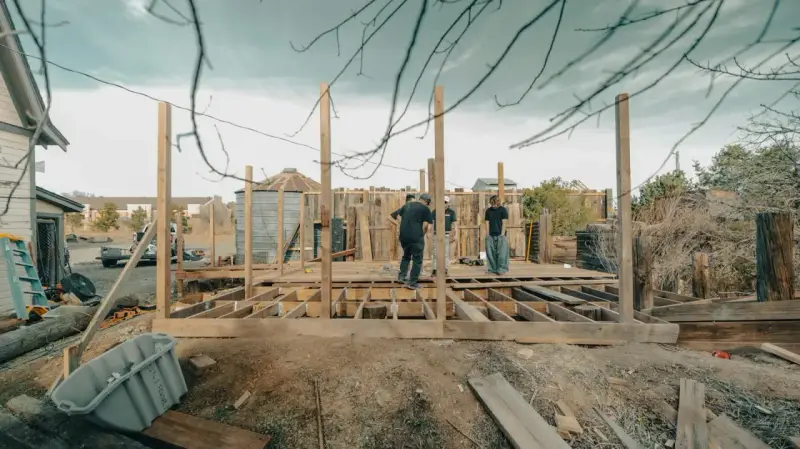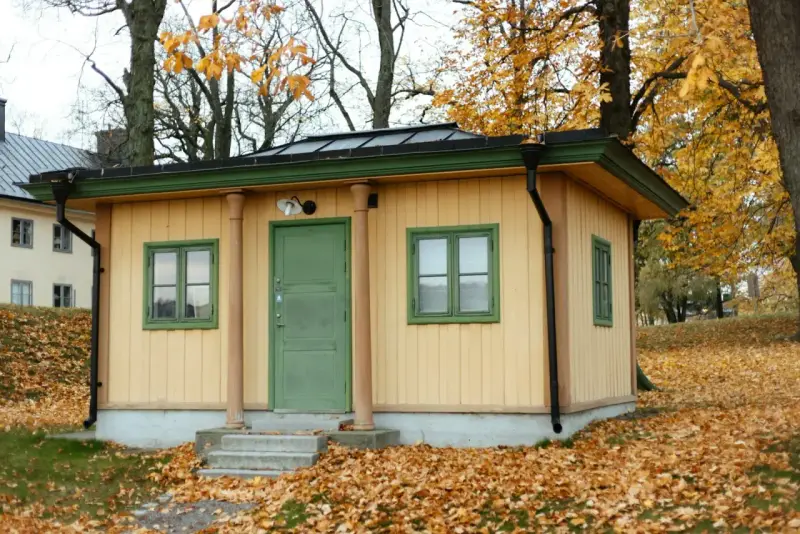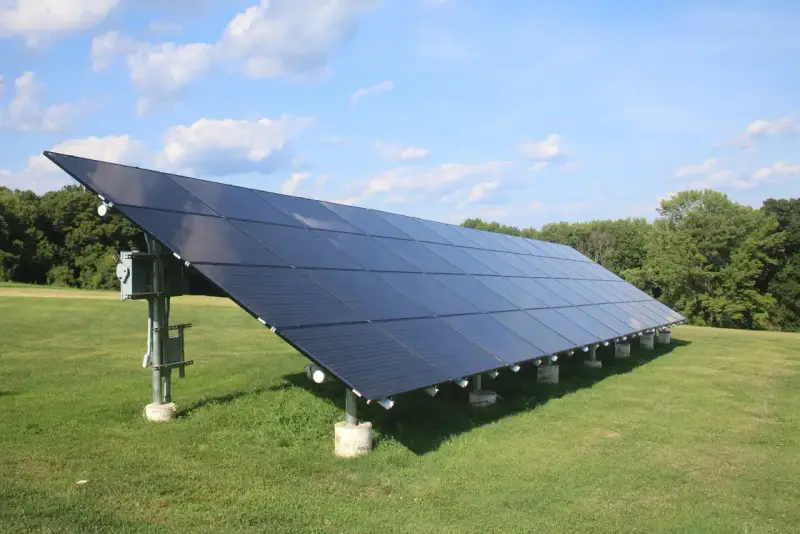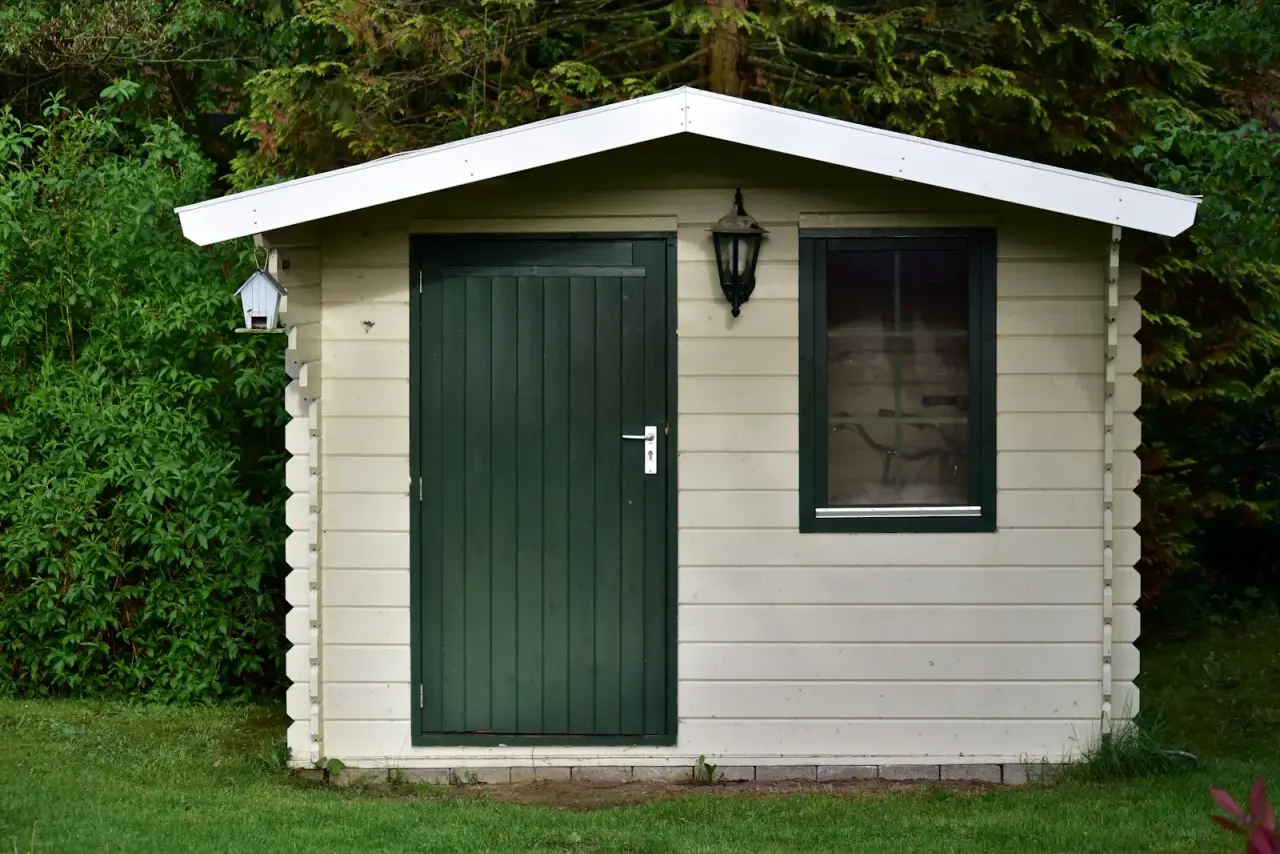
A screw pile shed foundation makes sense when the shed is big, heavy, on a slope, or sitting on the expansive clay that covers much of the Front Range. For a small plastic shed on flat, sandy ground, a compacted gravel pad is usually fine and much cheaper. The deciding question is how much movement you can live with, because on Colorado clay a shallow base will move with the seasons, and a screw pile that reaches below the frost line and the wettest soil mostly won’t.
Below is how the four common options compare, what Denver actually requires for sheds, and how deep the piles need to go.
What Denver requires for a shed
Denver’s permit guidance is short. All sheds need a zoning permit. Sheds over 8 feet tall or over 200 square feet also need a building permit, and some need a sewer use and drainage permit as well (Denver Residential Sheds). The same page notes that foundation permits aren’t issued separately; the foundation rides on the shed permit. If you add power, heat or water, trade permits follow.
Suburbs set their own thresholds, so if you’re in Arvada, Lakewood or Westminster, check that city’s rules before you order the kit.
The frost-depth exemption, and why it doesn’t save you
Here’s the part most shed guides skip. Denver’s residential code requires foundations to be protected from frost, normally by bearing at or below the frost line, which Denver’s Table R301.2 sets at 36 inches (Denver Residential Code 2025, Ch. 3). But R403.1.4.1 exempts small, free-standing accessory buildings without living space: up to 600 square feet if light-frame (wood or steel studs), up to 400 square feet for other construction, with walls 10 feet tall or less, and each one structurally independent (Denver Residential Code 2025, Ch. 4).
So a typical 10x12 or 12x16 wood shed is legally allowed to sit on gravel or blocks. That’s a code minimum. It says nothing about whether the shed will stay square.
On the Front Range the bigger mover is usually swelling clay, with frost second. The Colorado Geological Survey says expansive soil can grow 10 percent or more in volume as the clay gets wet, and the swelling pressure can reach 20,000 pounds per square foot or more (CGS, Expansive Soil and Rock). A shed weighs nothing against that. When one corner sits by a downspout and the other three stay dry, the floor tips, the frame racks, and the doors start rubbing. That’s the “my shed moves” thread you see on Reddit every spring.
Shed foundation options compared
| Option | What it is | Movement on swelling clay | Frost movement | Slope tolerance | Best fit |
|---|---|---|---|---|---|
| Compacted gravel pad | 4–6 in of crushed rock inside a timber or steel frame, shed on skids | Moves with the soil surface | Moves with the soil surface | Poor; needs cut-and-fill or a retained pad | Small sheds, flat sandy or gravelly lots |
| Concrete blocks / deck blocks | Precast blocks set on grade under skids or beams | Moves; blocks can tip individually | Moves | Fair with shimming; stacks get unstable | Light sheds you’re willing to re-level |
| Concrete slab | Poured slab, often thickened at the edges | Can heave and crack if the clay is wet unevenly | A shallow slab can still lift | Poor without forming and fill | Workshops that need a hard floor, garage-style sheds |
| Screw / helical piles | Steel shafts with helix plates turned into the ground, beams on top | Bears below the most active soil if long enough | Bears below the frost line if long enough | Good; each pile is cut to its own height | Large or heavy sheds, slopes, clay lots, sheds you’ll put a floor load in |
The table isn’t saying piles always win. If the shed is a 6x8 resin box for garden tools, gravel is the right answer. Piles earn their cost when the shed is heavy, valuable, or on ground that’s going to fight you.
When screw piles are worth it
These are the cases where we’d point a homeowner toward piles instead of a pad:
- The shed is large enough to need a building permit anyway, so it’s getting reviewed and you’d rather it stay square.
- It’s going to hold real weight: a workshop with a table saw and lumber rack, a gym, a tractor, or shelving full of paint and tile.
- The lot slopes. On a pad you’d be building a retaining edge and hauling in fill. With piles, the downhill ones stand taller and the beam stays level.
- You know the yard has clay. If the house has a structural floor or the soils report mentions swell, the shed site has the same dirt.
- Access is tight. A small machine can turn piles in a side yard where a concrete truck can’t reach, and there’s almost no spoil to haul away.
- You want to use the shed the same week. Steel piles carry load as soon as they’re installed; there’s no cure time.
How deep do screw piles for a shed go?
Deep enough that the helix plates bear in soil that isn’t moving with the weather. The Hubbell/Chance design manual gives a practical rule: put the top helix at least three helix diameters below the frost depth or the active zone of expansive soil. Its own example is a 4-foot frost depth with a 12-inch top helix, which puts the top helix at 7 feet (CHANCE Technical Design Manual, Sec. 6). Using the same arithmetic with Denver’s 36-inch frost line and a 10-inch helix gives a top helix around 5.5 feet, before you account for any deeper clay activity.
On clay lots the active zone can run deeper than the frost line, and that’s the depth that usually controls. If the house had a soils report, it will say how deep the active zone is assumed to be. For a shed that’s exempt from frost protection, nobody may require you to hit that depth. It’s still the depth that stops the movement.
Installation torque matters too. The pile is turned until it reaches a resistance that corresponds to the capacity it needs, which on a shed is modest. A good installer logs the final torque on every pile so you can see each one actually found firm ground.
Shed foundation on a slope
Slopes are where piles save the most work. A gravel pad on a 2-foot grade change needs a retaining edge on the low side, compacted fill, and drainage so the fill doesn’t wash out. Piles just get cut to different heights. The beam or rim frame sits level, and the ground underneath stays where it was, which also means you aren’t changing how water runs across the yard.
Keep the low side accessible. A shed that’s 3 feet off the grade on the downhill end will need a ramp or steps, and the open space underneath usually gets skirting so it doesn’t turn into a den for wildlife.
What to tell your installer
Have this ready when you ask for pricing:
- Shed footprint, wall height and roof type (kit model number if it’s a kit).
- What goes inside, roughly: storage, workshop machinery, a vehicle.
- How the floor frame is built: skids, a beam-and-joist floor, or a slab-style floor system.
- Distance and gate width from the street or alley to the shed site.
- Any known utility lines, sprinkler lines or old tree roots in the area. Call 811 for locates before anyone digs or drills.
- Whether a permit is needed, and if so, whether the city wants a letter or detail for the foundation.
Ask how many piles they plan, how deep they expect to go, and whether they’ll give you the torque log. If an installer can’t answer those, keep shopping.
Talk to us about your shed foundation
Site Safe Helical Piers installs helical piles for new outdoor structures across Denver and the Colorado Front Range, sheds included. We set the piles; your shed builder or kit installer does the rest. Call 970-673-5615 or use the contact form with your shed size and site photos, and we’ll tell you whether piles make sense or whether a gravel pad will do. For bigger outdoor builds, our post on helical piles for decks covers similar ground, and our services page lists the rest of what we install. If you want the background on why Colorado ground moves so much, read why helical piers suit Colorado soil.