Helical piles and driven piles do the same job: they carry a building’s load past the soil near the surface down to ground that can hold it. The difference is how they go in and how you prove they hold. A helical pile is screwed into the ground with a hydraulic torque motor, and the torque reading is its capacity record. A driven pile is hammered in, and the blow count per foot is its capacity record. On most Front Range house, addition and light commercial jobs the helical pile wins on access and noise. Driven piles win when the loads are heavy, the piles are long, or the job is in the water.
What each pile is and how it goes in
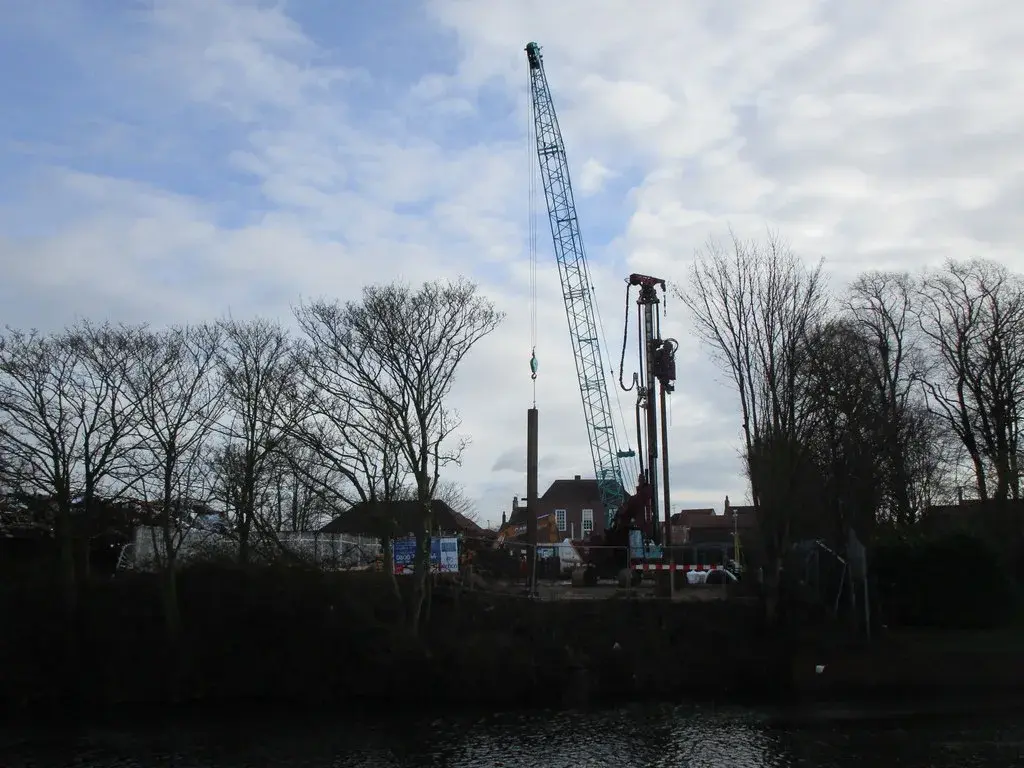
A driven pile, in the Pile Driving Contractors Association’s definition, is a long slender column of preformed material with a predetermined shape and size, installed by impact hammering, vibrating or pushing it into the ground. Steel H-piles, steel pipe, precast concrete and timber are the usual materials. A crane or tracked rig holds the pile in leads, and a hammer drives it until it reaches the depth or resistance the engineer set.
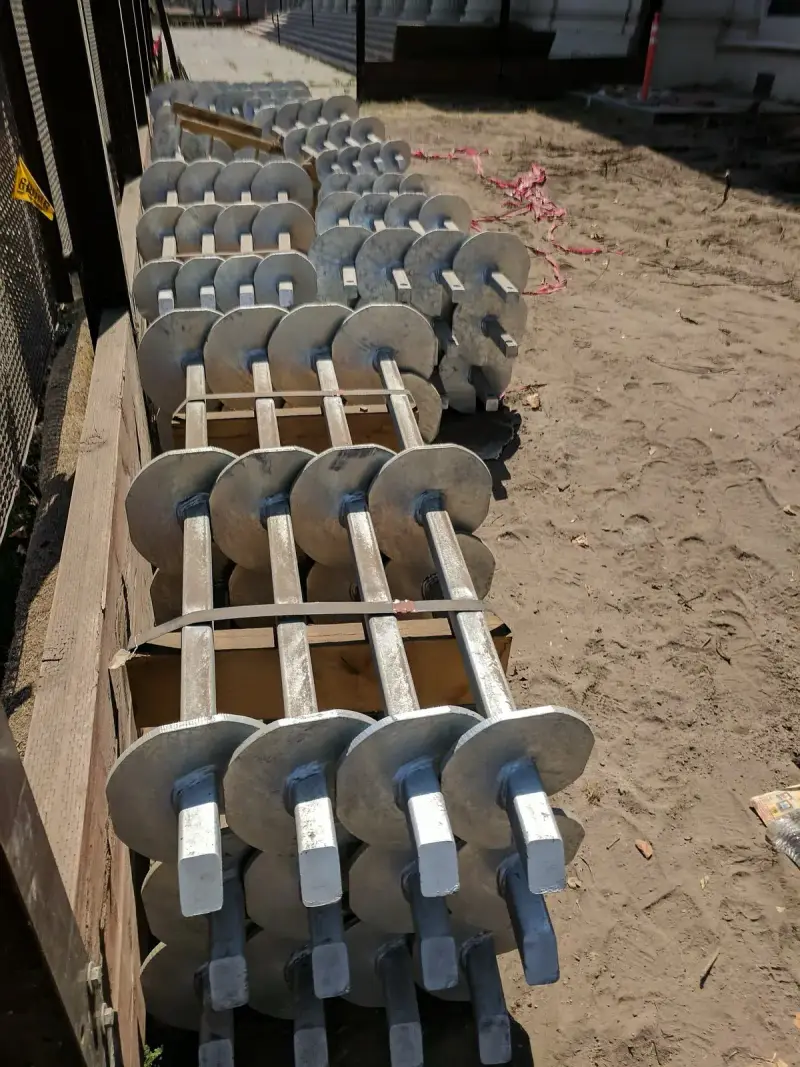
A helical pile is a steel shaft with one or more helix plates welded near the tip. A torque motor on an excavator or skid steer turns it into the ground like a screw, and extensions are bolted on until the lead section reaches soil that produces the specified torque. Denver’s code requires helical piles to be designed for the stresses of installation and service (IBC 1810.3.1.5) and installed to the depth and torque a registered design professional specifies, without exceeding the manufacturer’s rated maximum (1810.4.11).
Both are deep foundations under IBC Section 1810, both need a geotechnical investigation under 1803.5.5, and both get continuous special inspection. The inspection records are where they part ways.
How you know each pile holds
For driven piles, Table 1705.7 has the special inspector verify materials, sizes and lengths, inspect the driving, and record the hammer type and size, the number of blows per foot of penetration, tip and butt elevations and any damage. The allowable load can be set by an approved driving formula up to 40 tons; above that, 1810.3.3.1.1 requires a wave equation analysis. Load tests under 1810.3.3.1.2 follow ASTM D1143 (static) or D4945 (dynamic), with at least one tested element in each area of uniform soil, and the allowable load capped at half the tested ultimate. PDCA notes that a driven pile can be inspected before it goes in and often gains capacity afterward as the soil around the shaft recovers, an effect called setup.
For helical piles, Section 1705.9 has the inspector record the installation equipment, pile dimensions, tip elevations, final depth and final installation torque for every pile. Under 1810.3.3.1.9 the allowable axial load is the least of several values, one of which is the ultimate capacity from well-documented correlations with installation torque. ICC-ES AC358 sets the default torque factors: Kt of 10 per foot for 1.5- and 1.75-inch square shafts, 9 for 2.875-inch pipe, 8 for 3-inch pipe and 7 for 3.5-inch pipe, each verified by full-scale load tests in the product’s evaluation report. The crew reads the torque on a calibrated gauge as the pile turns, so the capacity check happens on every pile as it goes in.
| Driven pile | Helical pile | |
|---|---|---|
| Field capacity record | Blows per foot, hammer type and energy (Table 1705.7) | Final installation torque, depth, tip elevation (1705.9) |
| Code basis for capacity | Driving formula to 40 tons, wave equation above that; static or dynamic load tests (1810.3.3.1.1, 1810.3.3.1.2) | Torque correlation with tested Kt, plus bearing and shaft calculations (1810.3.3.1.9, AC358) |
| Installation rule | Driving sequence and spacing restrictions near fresh concrete (1810.4.1) | Specified depth and torque, not over manufacturer’s maximum (1810.4.11) |
| Special inspection | Continuous, 1705.7 | Continuous, 1705.9 |
| Load after install | Immediately, with setup gains over time | Immediately |
Noise and vibration next to existing buildings
This is the first question on an infill lot in Denver or an addition next to a neighbor’s house. FHWA’s driven pile manual puts noise from impact pile driving at roughly 80 to 135 dBA depending on the hammer and pile, and says suppression devices on some diesel and hydraulic hammers trim that by about 10 dBA. It recommends checking local noise ordinances before choosing a hammer.
On vibration, the same manual says ground vibration is always produced by impact or vibratory driving, that commonly recommended safe levels for structures run from 0.5 to 4 inches per second of peak particle velocity, and that loose sands have settled at surface velocities as low as 0.1 to 0.2 inches per second. It recommends pre-construction condition surveys and vibration monitoring wherever structures or utilities sit within reach, and its selection table lists sites where driving vibration or heave would affect adjacent facilities among the places driven piles are a poor fit. Denver’s code adds its own spacing rule: no driving within six pile diameters of an uncased concrete element less than 48 hours old in granular soil (1810.4.1.3), and vibratory drivers only where capacity is verified by load test (1810.4.5).
A helical pile’s torque motor makes the noise of an excavator at work and puts no hammer blows into the ground. That’s the practical reason helical piles get used for additions built tight against an existing house and for commercial pads next to occupied buildings.
Front Range ground: cobbles, claystone and the active zone
USGS surficial mapping of the Denver quadrangle describes alluvial-fan deposits along the mountain front as gravelly sand with pebbles, cobbles and boulders, with boulders up to 6 meters across scattered on some slopes, and it defines cobbles as 2.5 to 10 inches and boulders as anything larger. FHWA lists boulder fields and a shallow depth to a hard stratum among the conditions where driven piles are not preferred, because obstructions above the bearing layer raise the risk of damaging the pile during driving.
Helical piles have their own limit in the same ground. A helix that hits a cobble it can’t push aside stops advancing, and the torque spikes. Crews pre-drill, shift the pile location within the engineer’s tolerance, or switch to a smaller helix. Neither pile type is a free pass through cobbles; the difference is that a helical pile tells you about the obstruction on the gauge before anything is bent. Our post on why helical piers suit Colorado soils covers the ground conditions in more detail.
Across the metro’s clay and claystone, the issue is the active zone rather than obstructions. The Colorado Geological Survey puts swell in expansive soils at up to 20 percent by volume and says lightly loaded foundations are the ones most often damaged. Both pile types carry the load below that zone, and both need a soils report to say how deep it is. Read why soil testing comes before a new home for what that report covers.
Site access and equipment
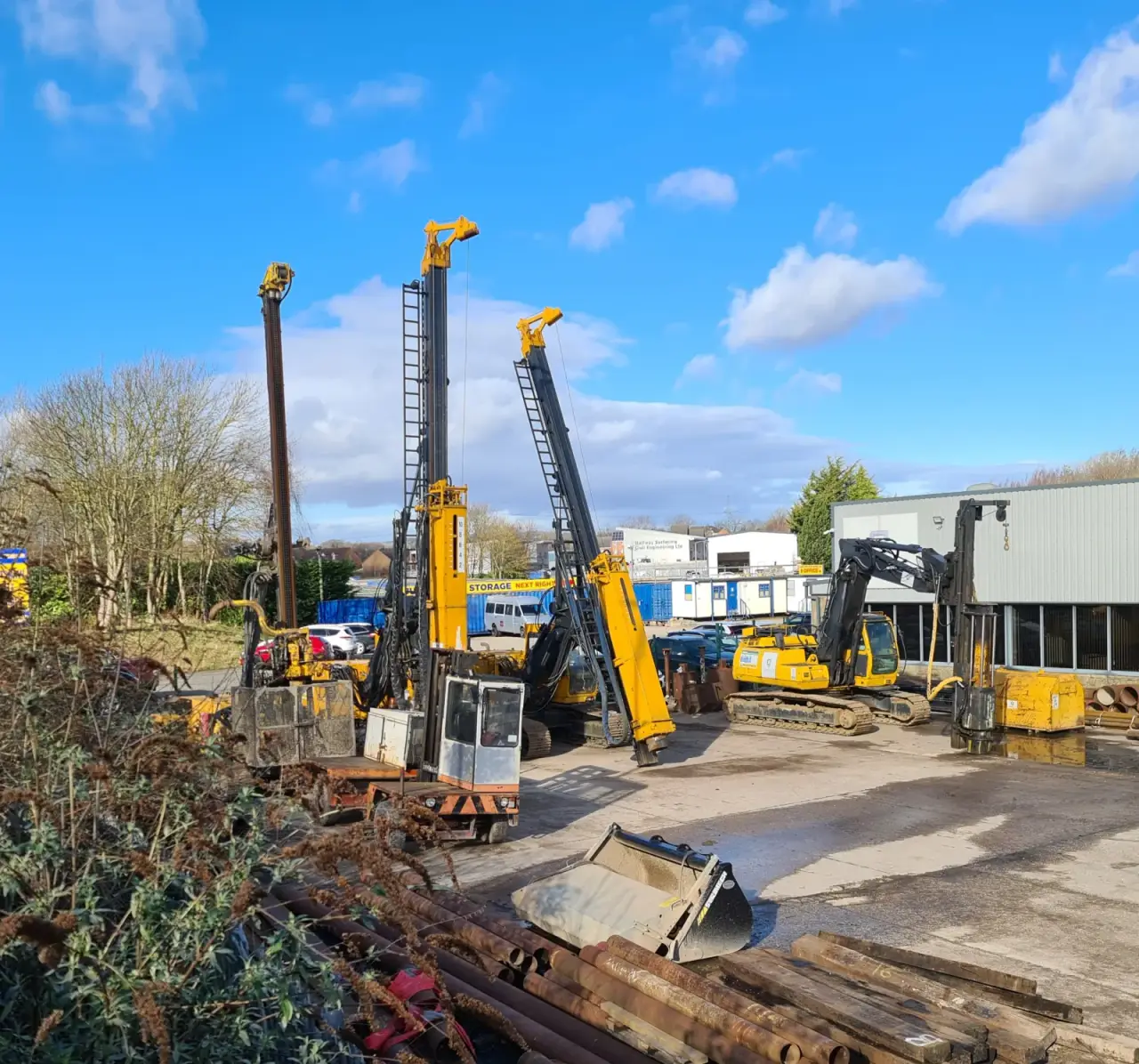
A driven-pile rig is a crane or tracked machine with leads tall enough to hold the full pile length, plus the hammer and the trucks that deliver the piles. FHWA notes that limits on head room, work space and access raise the cost of a driven-pile job. A helical rig is an excavator or skid steer with a torque motor on the stick, and the piles arrive in sections that fit in a pickup. That is why helical piles show up under additions reached through a side gate and on sloped lots where a crane has nowhere to set up.
What moves the cost
Neither method has a fixed price per pile. The drivers are the same for both: pile count and length from the engineer’s schedule, the soils report, mobilization, site access and the inspection program. Driven piles carry a large mobilization cost for the crane and hammer, which spreads thin across a hundred piles and sits heavy on ten. Helical piles mobilize cheaply but cost more per foot of steel. On big commercial foundations the driven pile often comes out ahead; on a house, addition or deck it rarely does. FHWA adds that restrictions on vibration, noise and work hours push driven-pile costs up, which is routine in a built-up neighborhood.
Where driven piles are the right call
Driven piles are the better choice when column loads are heavy and the bearing layer is deep, when piles have to go through water for a dock or bridge pier, or when a large count makes the crane mobilization worthwhile. FHWA’s selection table puts driven piles at 15 to 300 feet below grade for heavy column and bridge loads. A house in Arvada doesn’t need that. A warehouse on a deep soft layer might.
Comparison at a glance
| Driven pile | Helical pile | |
|---|---|---|
| Installation | Impact or vibratory hammer | Hydraulic torque motor |
| Rig | Crane or tracked rig with leads | Excavator or skid steer |
| Noise | 80 to 135 dBA at the hammer (FHWA) | Excavator noise |
| Vibration | Always present; monitoring often required | No hammer blows |
| Cobbles and boulders | Not preferred in boulder fields (FHWA) | Pre-drill or relocate; torque gauge flags refusal |
| Capacity proof | Blow counts, load tests | Torque on every pile |
| Best fit in Colorado | Heavy commercial, marine, long piles, large counts | Homes, additions, decks, solar, light commercial, tight access |
Planning a deep foundation in Denver?
Site Safe Helical Piers installs helical piles for new foundations across Denver and the Front Range, from decks and additions to commercial pads. If your engineer is weighing pile types for a new build, contact us or call 970-673-5615, and see our services for what we do.