Helical piles are used to support new structures where the soil near the surface can’t be trusted: houses and additions on swelling clay, decks and porches, garages and ADUs, boardwalks over wet ground, equipment pads, solar racks, towers and signs. They push down (compression), hold down (tension) and, with the right design, resist sideways loads. Because they’re screwed in with small machines and carry load right away, they also get picked for sites where a drill rig or concrete truck can’t easily go.
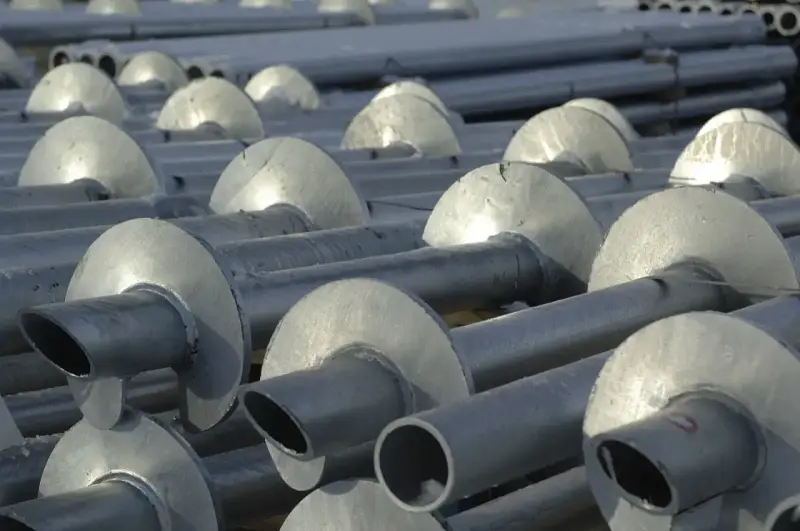
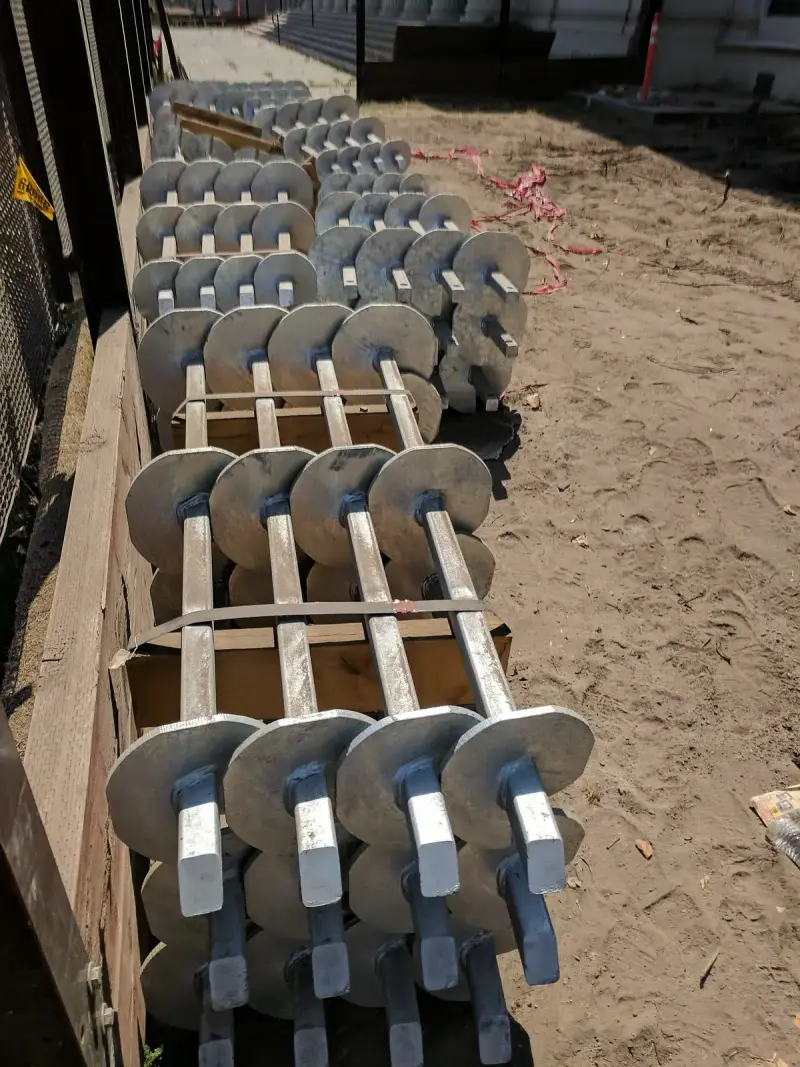
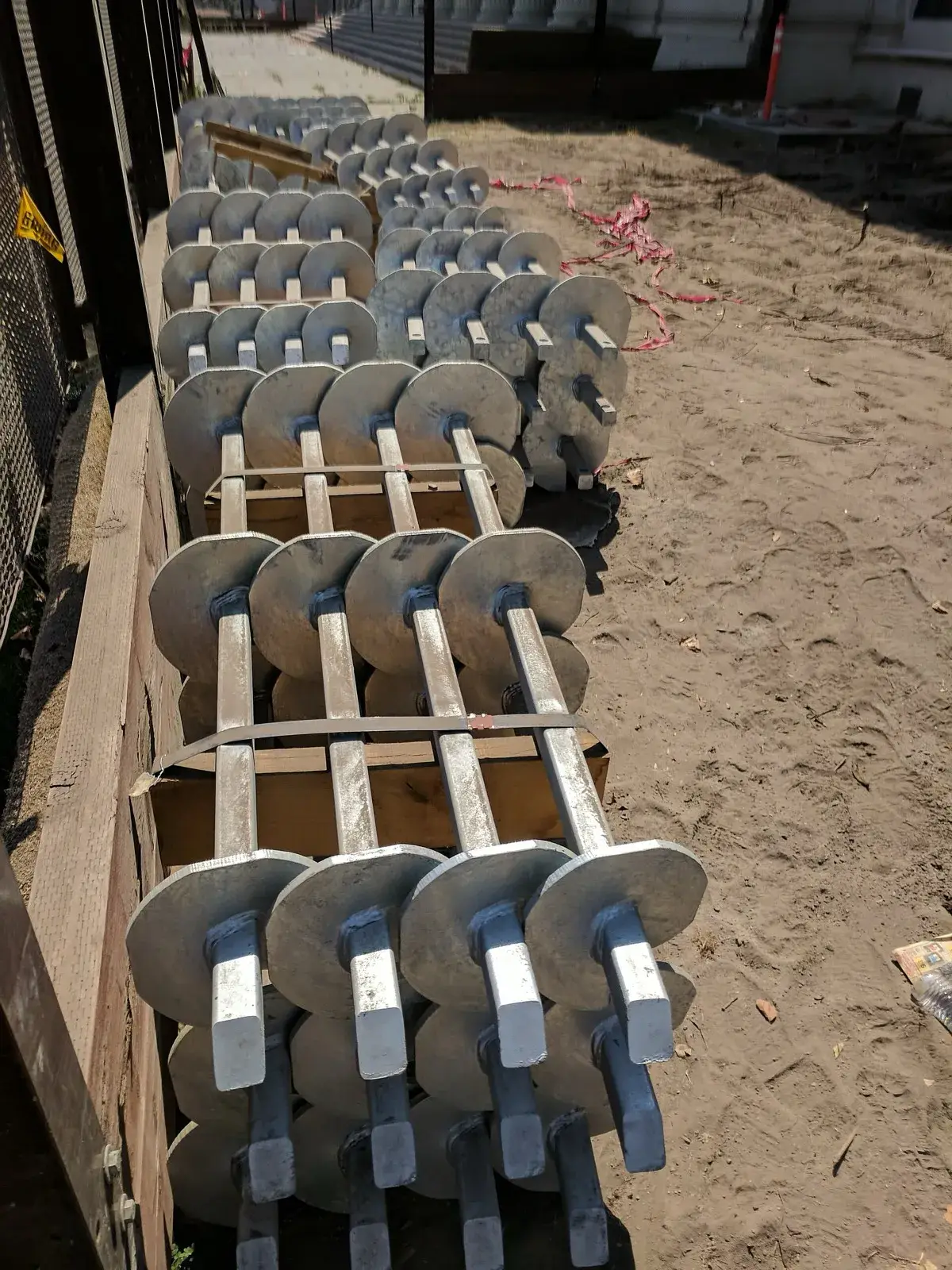
A helical pile is a steel shaft with one or more helix plates near the tip. It’s turned into the ground until it reaches the depth and torque the engineer specified, then capped and tied into the structure. “Helical pier,” “screw pile” and “helical screw pile” usually mean the same thing. A “helical anchor” is the same idea designed mainly for pulling loads.
A short history: lighthouses first
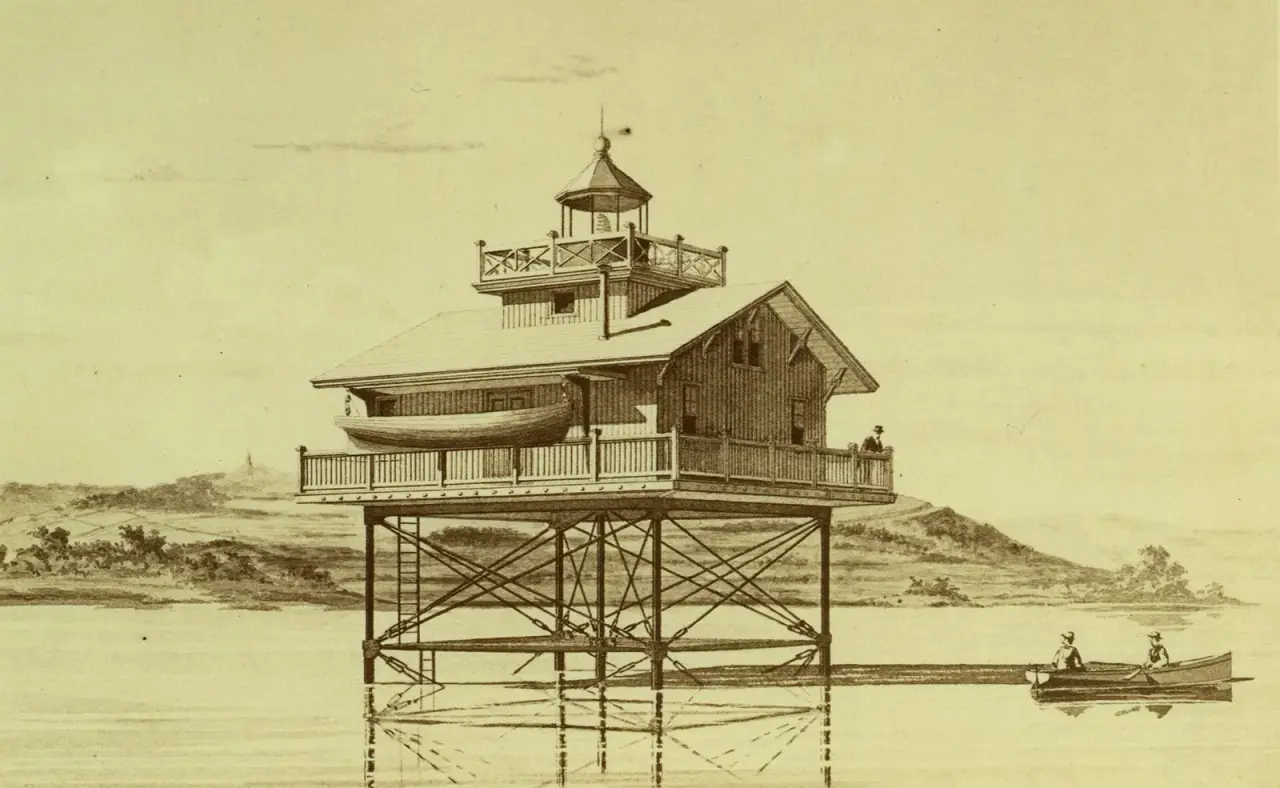
The Chance design manual credits English inventor Alexander Mitchell with patenting the “screw pile” in 1833 and using it to support lighthouses in English tidal waters, with the idea later used for lighthouses off Maryland, Delaware and Florida (CHANCE Technical Design Manual). One survivor is Thomas Point Shoal Light in the Chesapeake Bay, a screw-pile lighthouse commissioned in November 1875 (U.S. Coast Guard History Program).
The modern version is a code-recognized deep foundation. The same manual notes helical piles have been listed as a deep foundation system since the 2009 International Building Code, and ICC-ES first published its acceptance criteria for them, AC358, in 2007. The current AC358 sets how products are tested and how installation torque is tied to capacity (ICC-ES AC358).
Why the load type matters
Every use below falls into one of three buckets, and the bucket decides the design:
- Compression piles hold weight up. Bearing in the helix plates does most of the work.
- Tension piles (anchors) resist uplift from wind, buoyancy or guy wires. Depth matters more here: for tension use, AC358 requires the top helix to be at least 12 times the largest helix diameter below the surface unless an engineer justifies less.
- Lateral loads push sideways. Most helical piles have slender shafts that give limited lateral resistance on their own when installed vertically, so the structure, extra piles or a bigger shaft has to handle it (CHANCE Technical Design Manual).
There’s also a ceiling. The Chance manual says installation limits keep the maximum design load per pile at about 100 kips in tension and 300 kips in compression, so heavier loads use pile groups.
Compression uses
1. New homes
On the Front Range, swelling clay is the main reason to put a house on piles. The Colorado Geological Survey says expansive soil can swell 10 percent or more in volume as it gets wet and exert pressures of 20,000 pounds per square foot or more on foundations (CGS). The piles bear below the active zone, which the Chance manual puts at a typical depth of about 10 feet, so only the thin shaft passes through the moving soil. Our page on residential helical piles covers the house side in more detail.
2. Additions next to an existing house
An addition has to sit beside an old footing without undermining it. Screwing piles in avoids a big excavation and vibration next to the existing wall, and the small rig fits down a side yard.
3. Decks, porches and pergolas
Denver’s residential code puts the frost line at 36 inches (Denver Residential Code 2025, Table R301.2). A pile reaches that easily, with no holes to dig and no concrete to haul through the gate.
4. Detached garages and ADUs
Tight alley lots, no room for spoil piles, and a schedule that doesn’t want to wait on concrete cure for every pier.
5. Mountain cabins and hillside homes
Piles get cut to different heights instead of benching the slope for each footing, and they can go in where a concrete truck can’t reach.
6. Boardwalks, docks and bridges
The Chance manual calls helical piles the deep foundation of choice for walkways and boardwalks in wetlands and other sensitive areas. Little spoil, no casing in soft or wet ground, and light equipment. See our post on helical piles for docks and bridges.
7. Equipment and machinery pads
Generators, HVAC units, tanks and process equipment on new commercial sites, where weak surface soil would otherwise mean over-excavating and importing fill.
8. Modular and manufactured buildings
Factory-built units need level, frost-protected supports at set points, which matches a pile layout well.
9. Pool and spa structures
Pool decks, equipment pads and structures around a new pool on clay. We cover this in pool foundations in Colorado.
Tension uses
10. Towers and guyed structures
The Chance manual lists telecommunication and transmission towers and utility guy anchors among the main uses. A guy wire pulls up and sideways, which is exactly what a helical anchor is built to resist.
11. Canopies, carports and lightweight roofs
Big roof, little weight. Wind uplift can exceed the dead load, so the foundation has to hold down as well as hold up.
12. Pipeline buoyancy control
Buried pipelines in wet ground can float. Helical anchors strapped over the pipe hold it in place; the manual includes a design example for exactly this. We also have a post on pipeline foundation construction.
Lateral and combined uses
13. Solar ground mounts
Solar racks combine light weight, wind uplift and sideways load. Piles go in fast in long rows with no concrete. See why helical piles suit solar foundations.
14. Signs, light standards and retaining walls
The manual lists signs and light standards subject to wind and earthquake load. For retaining walls, helical tiebacks reach back into the soil behind the wall; our retaining wall foundation post covers that.
Uses at a glance
| Use | Main load | Why helical piles get picked |
|---|---|---|
| New homes | Compression | Bear below swelling clay; torque-verified capacity |
| Additions | Compression | No excavation or vibration beside the old footing |
| Decks, porches, pergolas | Compression (some uplift) | Reach the 36-inch Denver frost line without digging |
| Garages and ADUs | Compression | Small rig, little spoil, alley access |
| Mountain and hillside homes | Compression and lateral | Piles cut to grade; no benching each footing |
| Boardwalks, docks, bridges | Compression | Wet ground, no casing, light equipment |
| Equipment pads | Compression | Avoid over-excavation of weak soil |
| Modular buildings | Compression | Level, set-point supports |
| Pool structures | Compression | Clay movement around the pool |
| Towers and guy anchors | Tension | Built to resist pull-out |
| Canopies and carports | Tension | Wind uplift exceeds dead load |
| Pipeline buoyancy | Tension | Holds pipe down in wet ground |
| Solar ground mounts | Lateral and tension | Fast rows, no concrete |
| Signs, light poles, retaining walls | Lateral | Engineered for wind or earth pressure |
Where helical piles aren’t the right tool
They’re not for every job. Dense cobbles and boulders can stop them or need pre-drilling. Very heavy column loads need groups or a different deep foundation. Soils that are highly corrosive (very low resistivity, acidic, or high in sulfates) are outside AC358’s scope and need a site-specific design. And a flat lot with stable, non-expansive soil may simply be cheaper on a conventional footing. A soils report tells you which situation you’re in.
Talk to us about your project
Site Safe Helical Piers installs helical piles for new construction across Denver and the Colorado Front Range, from homes and additions to decks, commercial buildings and solar. We work from your engineer’s design and hand over the installation log; we work on new construction only. Call 970-673-5615 or see our services page to find out whether piles fit your build.