Pouring concrete in winter is possible, and Colorado crews do it every year. It takes thawed ground, warm concrete, and protection until the concrete reaches about 500 psi, the strength ACI says it needs to resist the disruptive force of freezing water. For footings that adds heaters, blankets, time and money, and a hard rule: no concrete on frozen soil. The alternative for many new foundations is to replace the footings with steel helical piles, which don’t cure, don’t care about frozen ground in the same way, and can carry load as soon as they’re installed.
To be clear about who does what: helical pile installers set the piles. Any concrete the design still calls for, like pile caps, a grade beam or a slab, is poured by the concrete contractor and still follows cold-weather practice. This article covers both halves.
What counts as cold weather for concrete
The American Concrete Institute’s current guide, ACI 306R-16, says cold weather exists when the air temperature has fallen to, or is expected to fall below, 40°F during the protection period. The protection period is the time needed to keep cold from harming the concrete.
You’ll still see the older definition quoted online. Fox Blocks, for instance, describes cold weather as air below 40°F for three days and below 50°F for more than half of any 24 hours. In a December 2025 article for ACI, Andrea Schokker explains why that changed: the old three-day rule could miss borderline conditions, such as nights below freezing when the daily average stays higher. The newer definition is simpler. On the Front Range, where a sunny 50°F afternoon can drop well below freezing overnight, the newer definition is the one that keeps you out of trouble. If a spec still uses the old wording, ACI suggests sending an RFI to clarify which one applies.
Why freezing ruins fresh concrete
Fresh concrete is full of water. If it freezes, the ice expands and breaks the bond between the paste and the aggregate. According to the ACI article, concrete that freezes before reaching a compressive strength of about 500 psi can suffer irreparable damage, including a significant loss of potential strength and durability. Cold also slows the cement reaction, so the concrete takes longer to reach that 500 psi mark and stays vulnerable longer.
That’s the core problem with winter footings. They’re poured into the ground, often on cold soil, and they need days of protection before they’re safe.
What a winter footing pour takes
Based on ACI 306R-16 as summarized by ACI, and the building code:
- Thaw the ground first. ACI says not to place concrete on frozen ground, because the ground moves as it thaws and the concrete can crack. The residential code says the same thing in its own terms: R403.1.4.1 states that footings shall not bear on frozen soil unless the frozen condition is permanent. In practice, that means ground heaters or insulated blankets on the footing trench, sometimes for days.
- Clear the forms. Remove ice, snow and standing water from formwork, rebar and embedded items. ACI recommends all contact surfaces be above freezing.
- Deliver warm concrete. ACI 306R-16 Table 5.1 recommends minimum placement temperatures by section thickness; for sections less than 12 inches thick, it’s 55°F. Suppliers use heated water and accelerators to get there.
- Protect it. Keep the concrete at or above the specified minimum for the whole protection period with insulating blankets, insulated forms, heaters or heated enclosures. Unvented heaters can cause carbonation and a soft, chalky surface, and they add safety concerns.
- Monitor it. Temperature sensors and maturity meters tell you when the concrete has gained enough strength to reduce protection.
- Ease off gradually. Removing blankets or shutting off heat all at once can crack the surface from thermal shock.
None of this is exotic. Good concrete contractors do it every winter. But the ACI article is direct about the effect: heated enclosures, blankets and ground-thawing equipment raise both project cost and complexity.
What changes when the deep foundation is steel
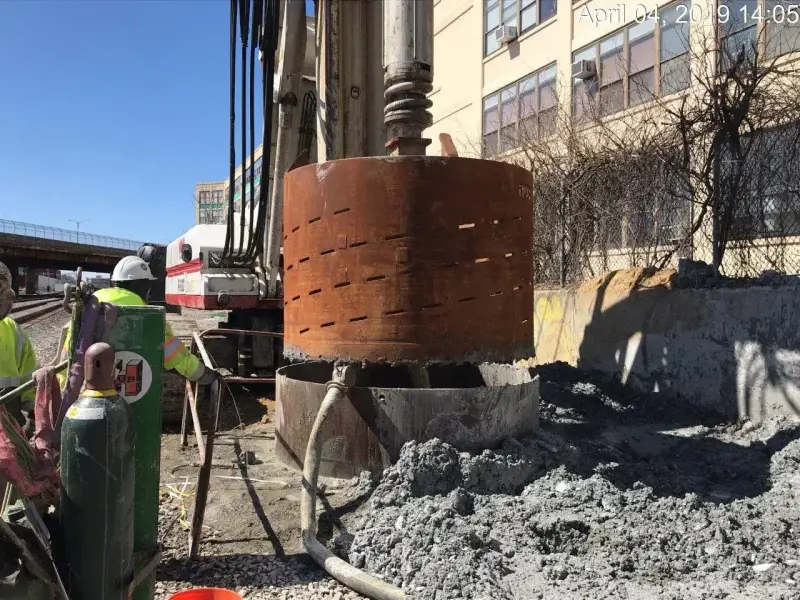
A helical pile is a steel shaft with helix plates, screwed into the ground with a hydraulic drive head on a compact machine. For the foundation elements that would otherwise be footings or drilled piers, that changes the winter math:
| Concrete footings in winter | Helical piles in winter | |
|---|---|---|
| Frozen ground | Must be thawed; footings can’t bear on frozen soil | Installed through the frozen crust; Magnum Piering notes pre-drilling may be needed |
| Bearing depth | Bottom of footing at or below the frost line (36 in in Denver) | Helix plates set well below the frost line and the active zone |
| Cure and protection | Days of protection until roughly 500 psi, then more strength gain | No cure; Techno Metal Post notes construction can begin right after installation |
| Equipment | Excavator, forms, ready-mix truck, heaters, blankets | Compact machine with a drive head |
| Spoils in snow | Excavated soil to stockpile or haul | Practically none |
| Verification | Footing inspection before the pour | Torque and depth logged on each pile (IBC 1810.4.11; commercial work gets special inspection under 1705.9) |
The bearing part of the foundation is where winter hurts concrete the most, because it sits in or on cold ground. With piles, that part is steel, installed below the frozen layer, and checked by torque the day it goes in.
The concrete that still gets poured
Here’s the part some helical pitches skip. Piles replace the deep or bearing elements, not every yard of concrete on the job. Depending on the design:
- Decks, porches, sheds and light additions often bolt framing straight to steel pile caps. No concrete at all.
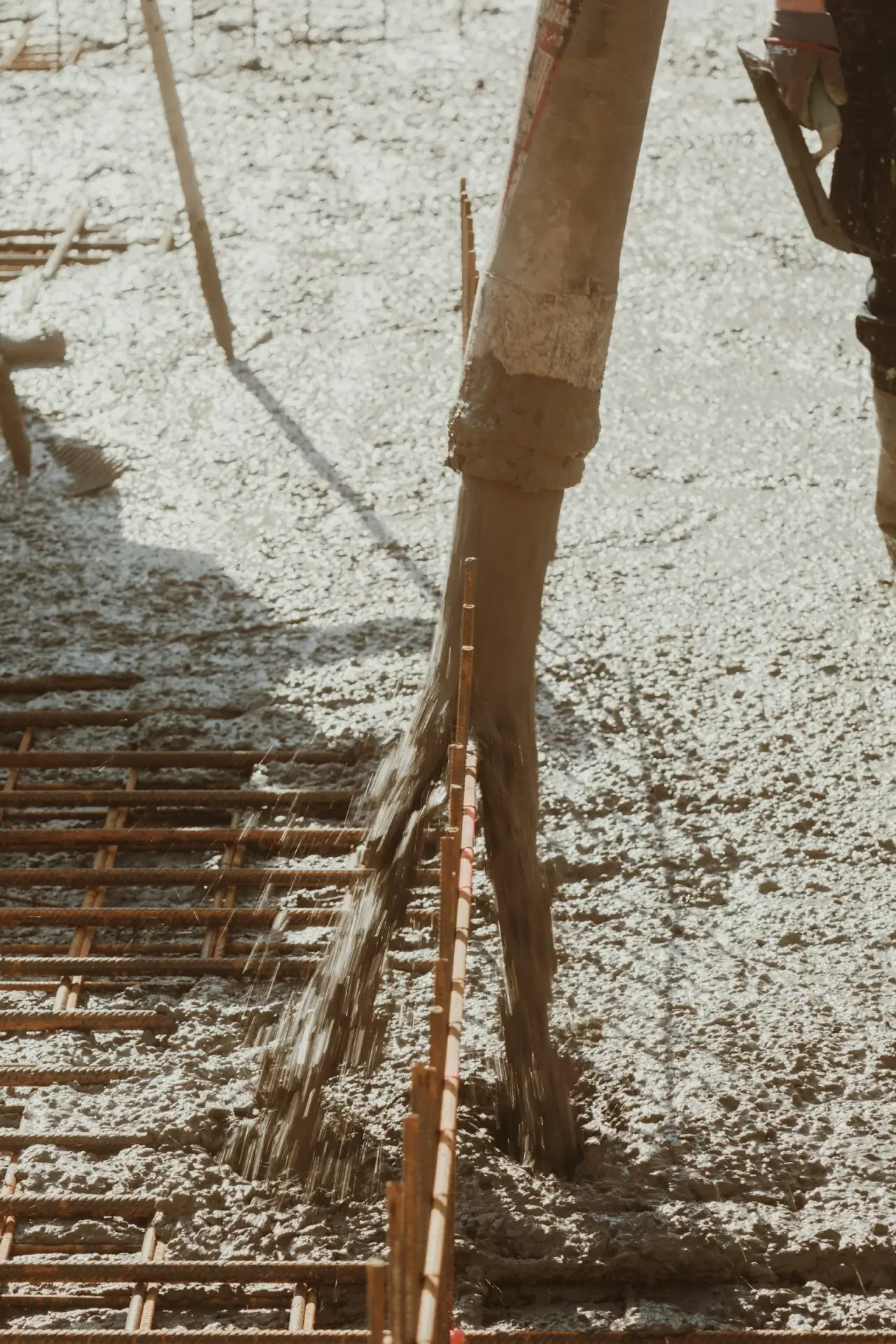
- Houses and larger additions usually have concrete pile caps and a grade beam spanning the piles, and sometimes a slab. That concrete is poured by the concrete contractor, and every cold-weather step above still applies to it.
What changes is that the grade beam carries load to the piles, not to the soil, so the bearing question moves off the frozen ground. The pour itself still needs warm concrete, clean forms and protection. Your engineer and concrete contractor decide how and when.
When to skip winter footings
Helical piles are worth pricing when:
- The schedule matters and a cold snap would push a footing pour back by days or weeks.
- The site is tight, wet or sloped, where thawing a long footing trench and protecting it is awkward.
- The structure is light enough to sit on steel caps with no concrete at all.
- The soils report already calls for deep foundations because of swelling clay, so you’d be drilling and pouring piers in the cold otherwise.
Concrete footings in winter still make sense when the design is a conventional spread footing on good soil, the concrete contractor is set up for cold-weather work, and the schedule can absorb weather days. It’s a cost and schedule call, and it’s worth getting both prices.
Winter foundation planning checklist
- Ask the engineer whether helical piles are acceptable for the foundation, and get the pile design (load, torque, minimum depth) early.
- Confirm the frost line for your jurisdiction and the active zone from the soils report.
- If concrete is still in the design, ask the concrete contractor for their cold-weather plan: ground thawing, minimum concrete temperature, protection method, monitoring, and how long protection stays on.
- Make sure the spec uses the ACI 306R-16 cold-weather definition, or clarify it by RFI.
- Plan snow removal and access for the pile rig as well as for the ready-mix truck.
Keep your winter build moving
Site Safe Helical Piers installs helical piles for new homes, additions, decks and commercial projects across Denver and the Colorado Front Range, in winter as well as summer. We don’t pour concrete. We install and log the piles, and your concrete contractor handles any caps, grade beams or slabs. Call 970-673-5615 or send us your plans to see whether piles can take your footings off the winter schedule. For more, read our comparison of helical piers and concrete footings for Colorado construction, see how helical pier installation works, or browse our services.