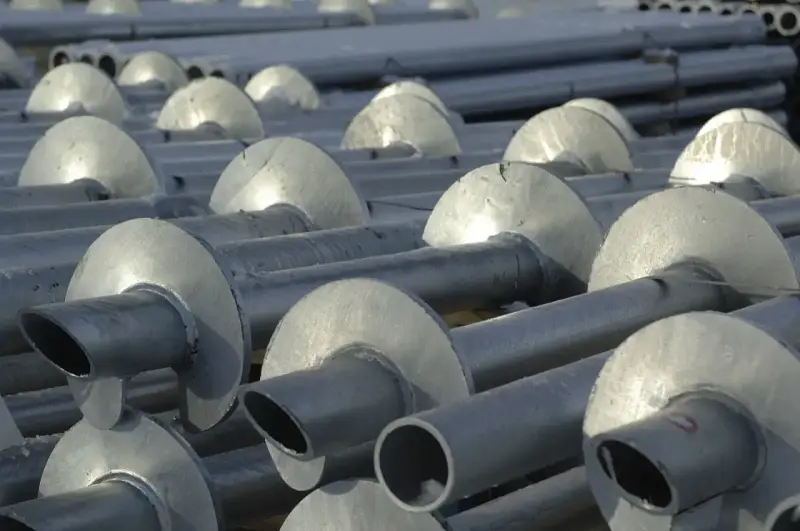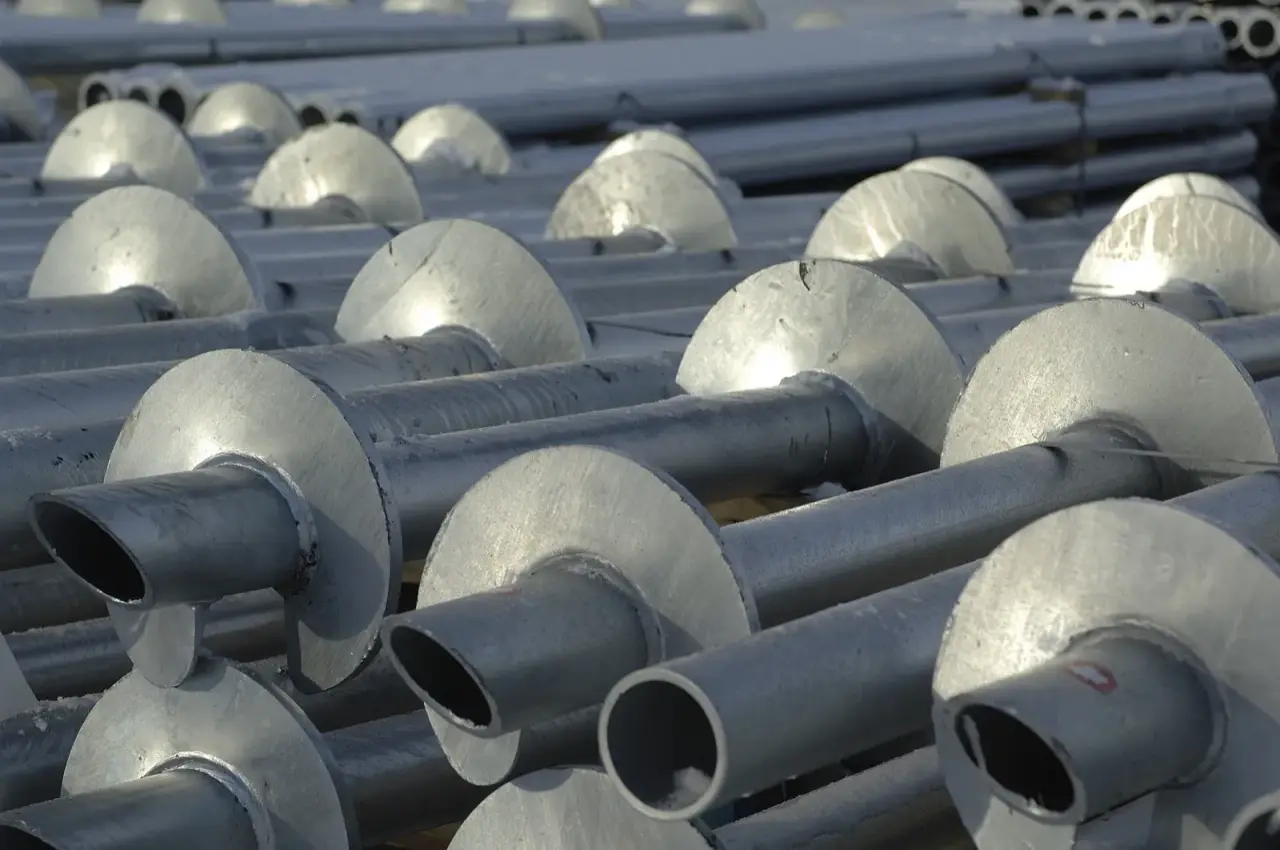
A helical pier goes as deep as it takes to reach the installation torque the engineer specified, in the soil layer the engineer wants it bearing in, and never shallower than a set of minimum depths for frost, swelling clay and the pile’s own geometry. On Front Range lots with swelling clay, that can easily land past the 10-foot mark, but there is no fixed number. Extensions get added until the criteria are met, so one pile on a lot can stop well short of its neighbor.
Here’s how the depth actually gets decided, and how to read it on the paperwork.
Depth is a result, not a target
The International Building Code, Section 1810.4.11, says helical piles must be installed to the embedment depth and torsional resistance criteria set by a registered design professional (UpCodes, IBC 1810.4.11). So the engineer writes two termination rules for each pile: a minimum depth and a minimum torque. The crew keeps adding extensions until both are met.
Torque is used because it tracks capacity. ICC-ES AC358 sets default torque-to-capacity factors (Kt) by shaft size, for example 10 per foot for 1.5- and 1.75-inch square shafts and 9 per foot for 2.875-inch round shafts, and applies a factor of safety of 2 to get the allowable load (ICC-ES AC358). The Chance design manual recommends judging torque as the average over the last 3 feet of penetration into the bearing layer, and says torque spikes from hitting obstructions must be ignored (CHANCE Technical Design Manual).
A quick example of the math. Say a deck pile needs an allowable load of 10 kips on a 1.75-inch square shaft. With a factor of safety of 2, the ultimate capacity has to be 20 kips. Divide by Kt of 10 and the target torque is 2,000 foot-pounds. The pile goes down until it holds about 2,000 ft-lb over its final 3 feet, and the depth where that happens is whatever the soil gives you.
The minimum-depth rules
Torque alone isn’t enough. A pile can spin up to torque in a stiff crust and still be too shallow. These are the floors engineers stack up.
Five helix diameters for deep-foundation behavior
Hubbell recommends the top helix sit at least five times its own diameter below the surface so it behaves as a deep foundation. A 12-inch helix means at least 5 feet to the top plate.
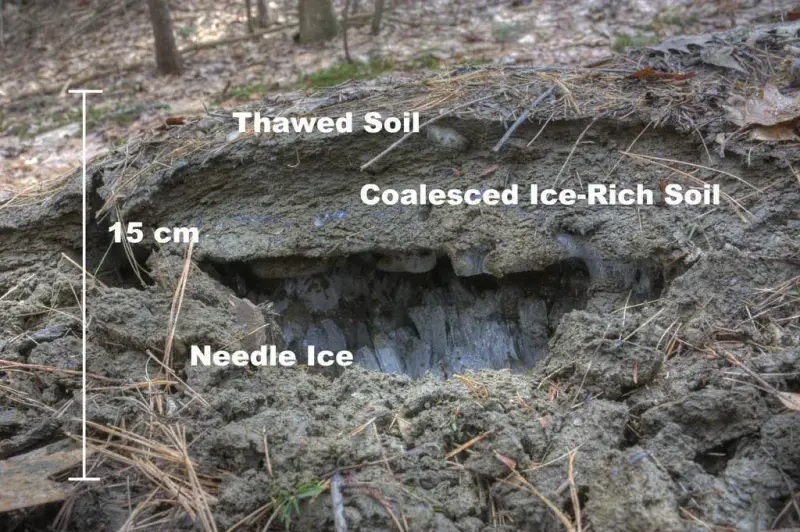
Three helix diameters below frost or the active zone
The same manual recommends the top helix be at least three helix diameters below the maximum frost depth or the active zone of expansive soil, whichever governs. Its own example: a 4-foot frost depth and a 12-inch helix put the top helix at 7 feet (CHANCE Technical Design Manual).
Twelve helix diameters for tension piles
Piles that resist uplift need more cover. AC358 and the Chance evaluation report both say tension piles must have the top helix at least 12 times the largest helix diameter below the ground surface, unless a design professional justifies less for the site (AC358; ICC-ES ESR-2794). A 14-inch helix in tension means at least 14 feet.
Enough shaft in firm soil to prevent buckling
The Chance evaluation report’s shaft capacities assume the pile is embedded at least 5 feet into firm soil or 10 feet into soft soil, where firm means a Standard Penetration Test blow count of 5 or more and soft means 1 to 4 (ESR-2794). Loose fill or wet, soft clay near the surface pushes the pile deeper.
Colorado frost depths
Frost depth is set by each building department, so check yours. A few examples from current design criteria:
| Jurisdiction | Frost depth | Source |
|---|---|---|
| City and County of Denver | 36 in | Denver Residential Code 2025, Table R301.2 |
| Larimer County (countywide) | 30 in | Larimer County Structural Design Information |
| Summit County | 40 in | Summit County Building Inspection Matrix |
Denver’s code also requires exterior footings to be at least 12 inches below undisturbed ground, and foundations to be protected from frost, most commonly by extending below the frost line (Denver Residential Code 2025, Ch. 4). For most residential piles, frost isn’t what controls the depth. Swelling clay usually is.
Why Front Range piles often go deeper than the frost line
On expansive clay the active zone, the depth where seasonal wetting and drying move the soil, is often deeper than the frost line. The Chance manual gives a typical active-zone depth of about 10 feet and recommends putting the helix plates well below it, so only the thin shaft passes through the moving soil. Your soils report states the active zone the engineer should design for. If it says 10 feet, the 3-diameter rule with a 12-inch top helix puts the top plate at 13 feet before torque even enters the picture. Our post on why helical piers suit Colorado soil covers the swelling-clay side in more depth.
Worked example: a deck pile in Denver
Assume the soils report shows no swelling clay concern at the deck location, and the pile is mostly in compression.
| Rule | Calculation | Minimum depth to top helix |
|---|---|---|
| Deep behavior (5 x helix) | 5 x 10 in | 4.2 ft |
| Frost (36 in + 3 x helix) | 3 ft + 3 x 10 in | 5.5 ft |
| Shaft in firm soil | 5 ft into soil with SPT N of 5 or more | Depends on the boring log |
| Torque | 2,000 ft-lb averaged over last 3 ft | Wherever the soil delivers it |
The deepest of these wins. If the same pile sat on swelling clay with a 10-foot active zone, the active-zone rule would push the top helix to about 12.5 feet. If it also carried uplift with a 12-inch top helix, the 12-diameter rule would require at least 12 feet. Real designs come from your engineer; this table just shows how the rules stack.
How deep can helical piles go?
There’s no practical code maximum. Piles are extended section by section until the criteria are met, and the limits are usually the shaft’s torque rating, the rig’s torque output, and what the soil holds. If torque never builds, the engineer may switch to a bigger helix, add a helix, or move to a larger shaft rather than keep going down.
The opposite problem is refusal: a pile that spins up to high torque on cobbles or rock at 4 feet hasn’t met anything. Spikes from obstructions don’t count, and the engineer decides whether to pre-drill, relocate or add a pile.
Reading depth on your installation log
Ask for the log. For each pile it should show:
- Pile ID matching the engineer’s plan.
- Lead section and extensions used, so you can add up the length.
- Final depth to the tip.
- Torque readings near the end of installation, and the final average torque.
- Any notes on refusal, relocation or added piles.
Check that every pile’s final depth is at or beyond the minimum on the plan, and every final torque is at or above the target. If a pile is shallow but met torque, the engineer should sign off on it.
Talk to us about your site
Site Safe Helical Piers installs helical piles for new homes, additions, decks and commercial projects across Denver and the Colorado Front Range. We set the piles to your engineer’s depth and torque criteria and hand over the log. If you’re starting a project, a soils report is the first step; when you have one, call 970-673-5615 or contact us, and see our services for the project types we cover.