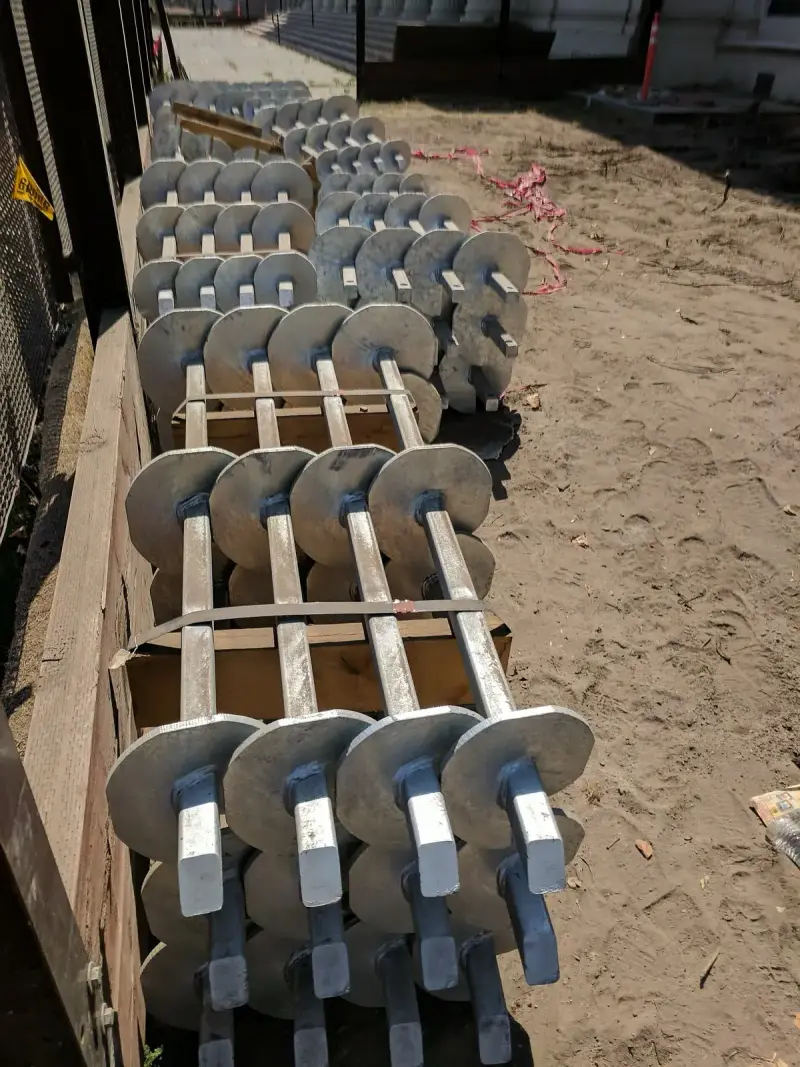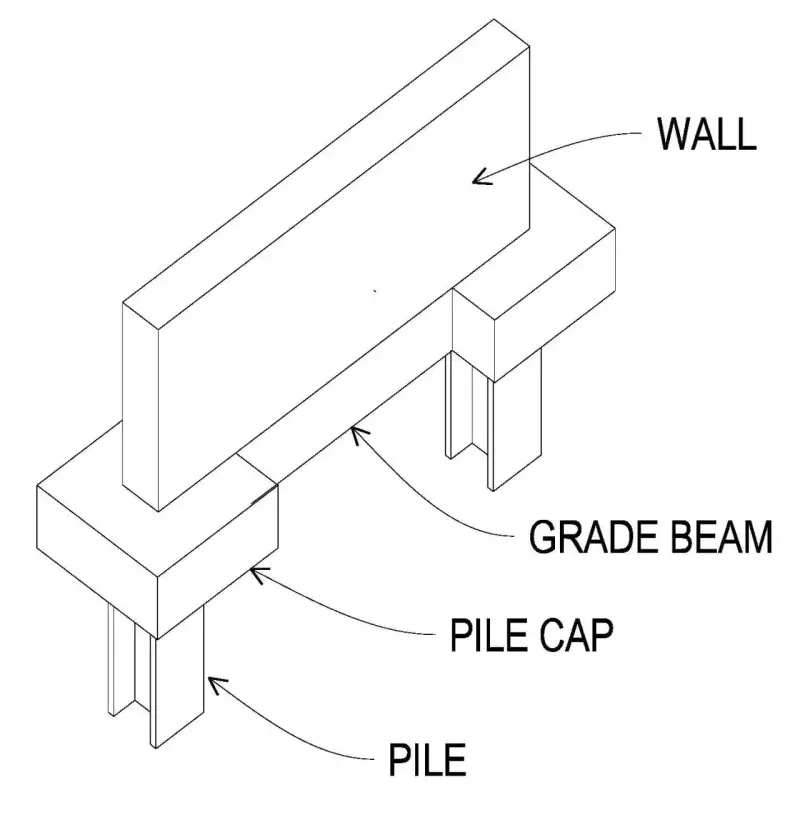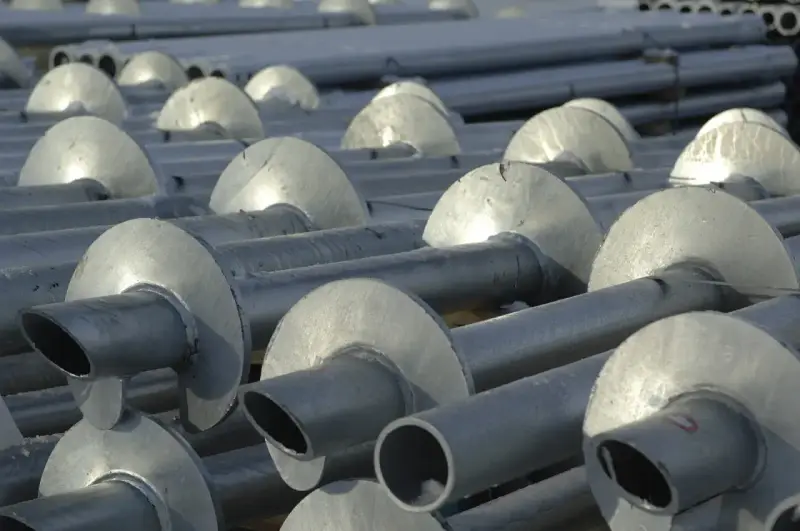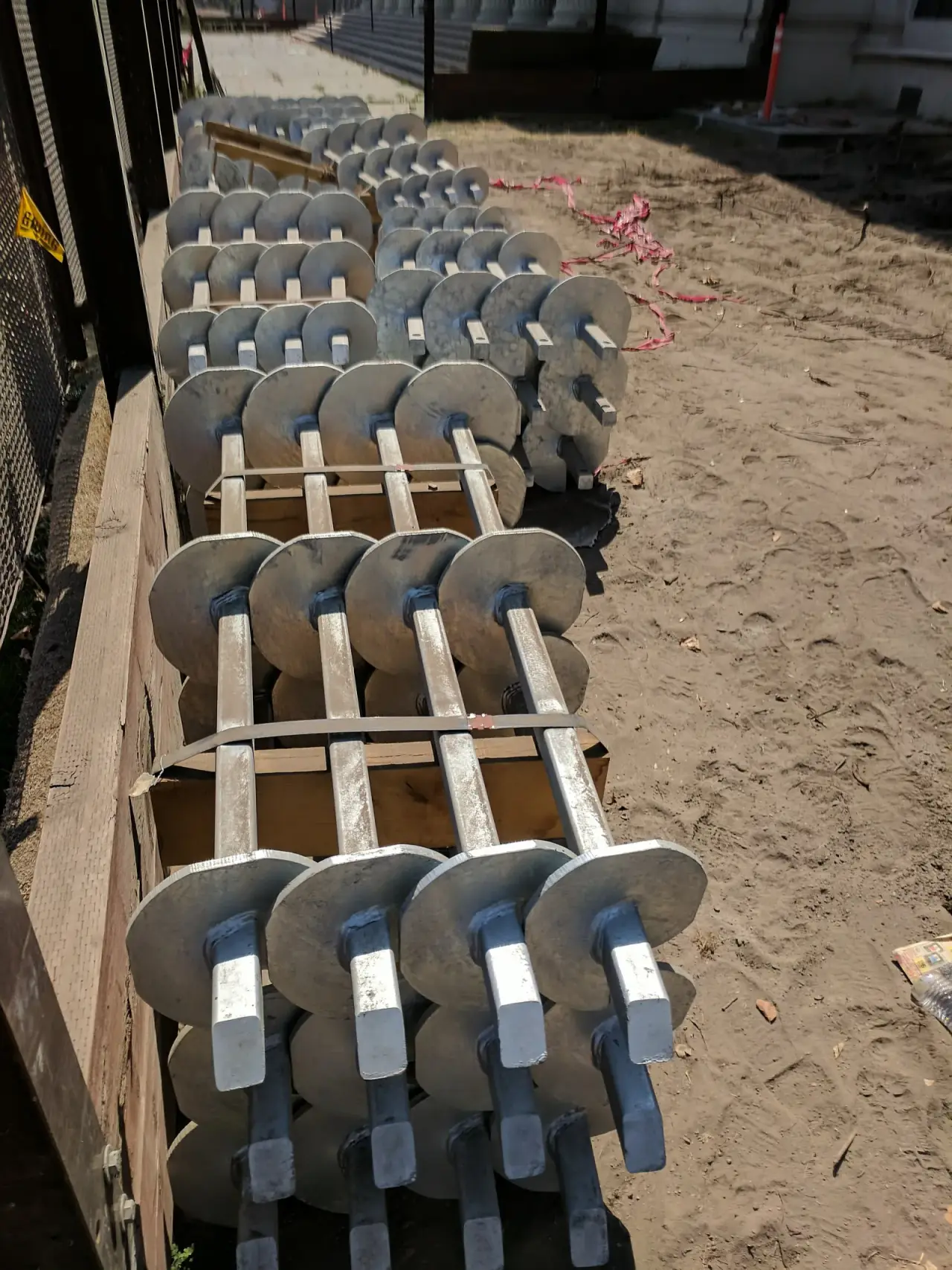
Helical pile installation equipment comes down to three parts working together: a carrier machine that holds the pile in position and resists the twisting force, a hydraulic drive head (torque motor) that turns the pile into the ground, and a calibrated torque indicator that records how hard the pile is pushing back. The carrier can be a mini excavator, a full-size excavator, a backhoe or a skid steer, according to Hubbell’s CHANCE foundation team, and on very tight jobs a compact purpose-built unit. For a homeowner or builder, the equipment choice decides what fits through the gate, how much lawn gets torn up, and whether the install log will satisfy the inspector.
What each piece of equipment does
Hubbell’s CHANCE team describes the carrier machine as doing three jobs: providing weight to resist the torque, supplying hydraulic flow to the torque motor, and positioning and aligning the pile. That’s a useful way to think about it.
The carrier is the base. Its weight and footprint resist the reaction from the drive head. A heavier machine can apply more torque without spinning or lifting itself.
The drive head is a hydraulic motor with a gearbox, hung from the excavator arm or skid steer attachment plate. It grips the pile through an adapter and rotates it at low speed and high torque. Drive heads come in torque ratings matched to the pile system. Using a head that’s too small means the pile can’t reach design torque. Using one far too large with the wrong pile risks twisting the shaft, which is why the building code says installation torque must not exceed the manufacturer’s rated maximum (IBC 1810.4.11).
The torque indicator is the piece people overlook. ICC-ES acceptance criteria AC358, the standard behind code-listed helical piles, says torque should be measured with a calibrated in-line indicator or a calibrated hydraulic torque motor read through differential pressure. Calibration must trace back to NIST, and the brand, model and maximum capacity of the indicator are part of the record.
Carrier machines compared
| Carrier | Where it fits | Typical jobs | Notes |
|---|---|---|---|
| Hand-held or compact purpose-built unit | Inside buildings, through doorways, under low decks | Light deck posts, interior points, very tight sites | Limited torque, so limited pile size. One manufacturer markets a 29-inch-wide machine built to fit through a standard door frame |
| Mini excavator | Side yards, backyards behind a gate, small lots | Decks, additions, garages, ADUs, sheds | The workhorse for residential new construction. Tracks spread the load on lawns |
| Skid steer or compact track loader | Open yards and lots with firm ground | Decks, solar ground mounts, fences, light commercial | Fast to move between piles. Attachment-mounted drive head |
| Backhoe | Rural lots and road-side jobs | Utility anchors, ag buildings | Useful where it’s already on site |
| Full-size excavator | Open commercial sites | Larger shafts, higher torque, deep piles, tension anchors | Needs room to swing and a firm working surface |
Access drives most residential choices. Measure the narrowest point between the street and the pile locations: gates, the gap between the house and the fence, any steps, overhead wires and trees. Then ask the installer what machine they plan to bring and how wide it is.
Why torque monitoring is the part that matters
A helical pile’s capacity is verified during installation, not after. AC358 links capacity to the final installation torque through a capacity-to-torque ratio, Kt. Its default values are:
| Shaft | Default Kt (per foot) |
|---|---|
| 1.5 in and 1.75 in square | 10 |
| 2.875 in OD round | 9 |
| 3.0 in OD round | 8 |
| 3.5 in OD round | 7 |
Here’s how that plays out. Say an engineer specifies a 2.875-inch round shaft and the pile finishes at 5,000 ft-lb of torque. Ultimate capacity is Kt times torque: 9 × 5,000 = 45,000 lb. AC358’s correlation method is built around a factor of safety of 2, so the allowable load works out to about 22,500 lb. If the torque gauge reads high because it’s out of calibration, every one of those numbers is wrong and nobody can see it after the pile is buried. That’s the reason the indicator has to be calibrated and the reading logged.
Building code backs this up on the inspection side. IBC Section 1705.9 calls for continuous special inspection during helical pile installation, and the records include the equipment used, pile dimensions, tip elevations, final depth and final installation torque. Many residential jurisdictions handle single-family work differently, so check what your building department wants. The engineer of record will still ask for the log.
What the equipment means for your yard and schedule
Compared with drilled concrete piers, helical installation is light work:
- No spoils pile. The helix displaces soil rather than augering it out, so there’s no dirt to haul away.
- No cure time. A pile can carry load as soon as it’s installed and capped. The concrete beam on top still needs its normal cure.
- Less ground damage. Tracked compact machines spread their weight. Plywood or ground mats on soft lawns help more.
- Weather. Piles can be installed through a frozen crust. Cold weather slows concrete, not steel.
Ask the installer where the machine will travel, where pile sections will be staged, and whether sprinkler lines or shallow utilities are in the path. Call 811 before any work starts.
Should you rent it or hire it?
Equipment rental yards carry drive head attachments, and handy owners do install small screw posts for fences and sheds. For anything that supports a permitted structure, the equipment is the easy part. The hard parts are the engineering (pile type, helix sizes, design load, target torque and depth) and a calibrated torque record that an engineer and inspector will accept. Without those, a pile that feels solid is just a guess.
Our post on helical pier installation walks through the full process, and the gallery shows jobs we’ve done. If you’re working on a deck, see helical piles for decks.
Getting the right rig to your site
Site Safe Helical Piers brings equipment sized for the job on new homes, additions, decks, commercial work and solar across Denver and the Front Range, and provides the torque and depth log for every pile. Tell us your narrowest access point and send the drawings through our contact page, or call 970-673-5615.