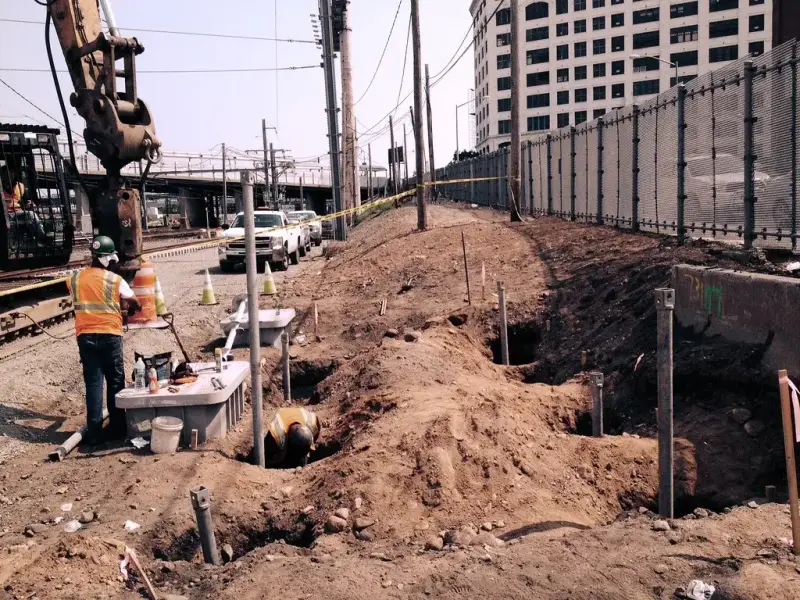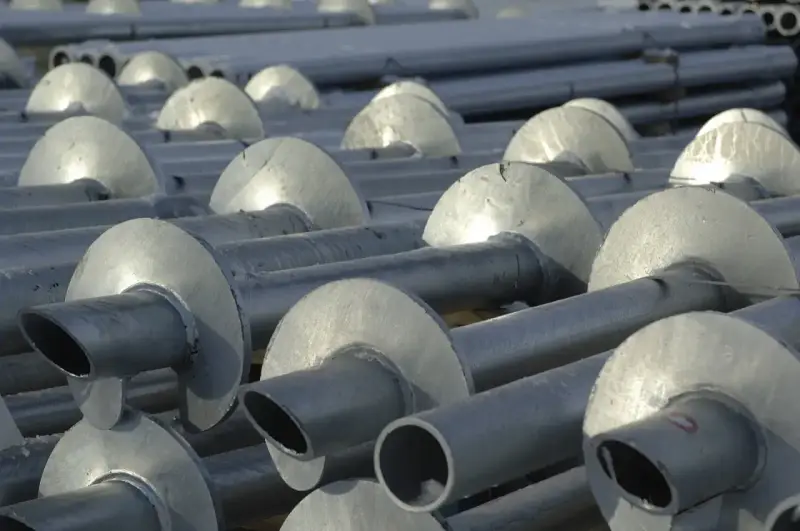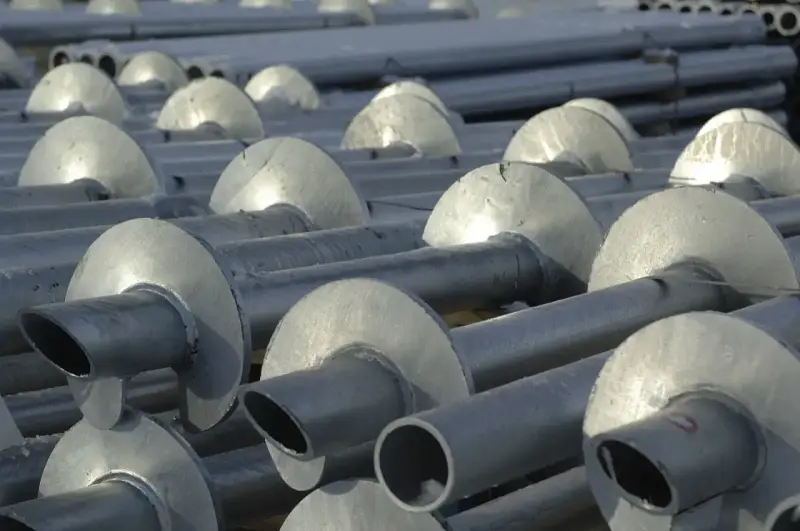
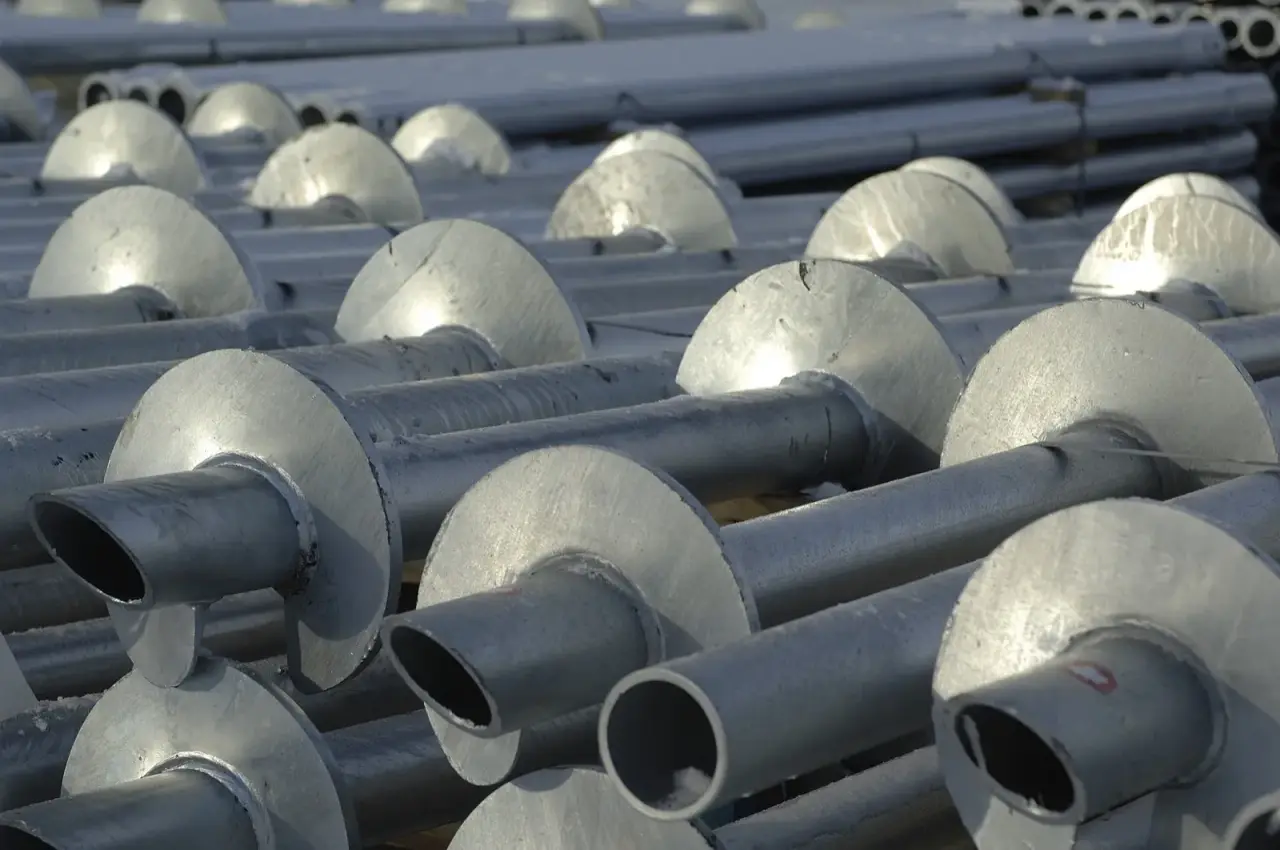
A properly designed helical pier is built to last at least 50 years, and in most soils galvanized steel lasts well beyond that. That 50-year figure isn’t a guess. Products evaluated under ICC-ES AC358 have their structural capacity calculated after subtracting the steel expected to corrode away over 50 years, so the rated capacity is the capacity at the end of that period. The American Galvanizers Association puts hot-dip galvanized steel’s service life at over 75 years in most soil conditions. What shortens the life of a pile is specific and testable: corrosive soil, fill near the surface, a fluctuating water table, and stray electrical current.
You’ll see “75 to 150 years” quoted online. Those numbers usually come without a source. Here’s what the standards and the research actually say, and how to make sure your project is in the long-lived group.
How service life is built into the ratings
AC358 requires every helical pile component to be reduced by a sacrificial thickness that represents 50 years of corrosion before capacity is calculated (ICC-ES AC358, Section 3.9):
| Coating | Sacrificial thickness over 50 years | Note |
|---|---|---|
| Zinc-coated (galvanized) | 318 μm (0.013 in) | For zinc coatings of at least 86 μm (0.0034 in) |
| Powder-coated | 671 μm (0.026 in) | Coating life is taken as 16 years at most |
| Bare steel | 915 μm (0.036 in) | No coating credit |
The thickness is taken off the shaft walls, the helix plates and the couplings. AC358 also says corrosion loss has to be accounted for whether the component is below ground, above ground or embedded in concrete. Galvanizing must meet ASTM A123, A153, B633 or B695 as applicable.
The Hubbell/Chance design manual adds context: it says experience over 60 years shows the large majority of square- and round-shaft helical piles have a calculated service life well past the structure’s design life, which it gives as typically 50 to 75 years in North America (CHANCE Technical Design Manual, Appendix A).
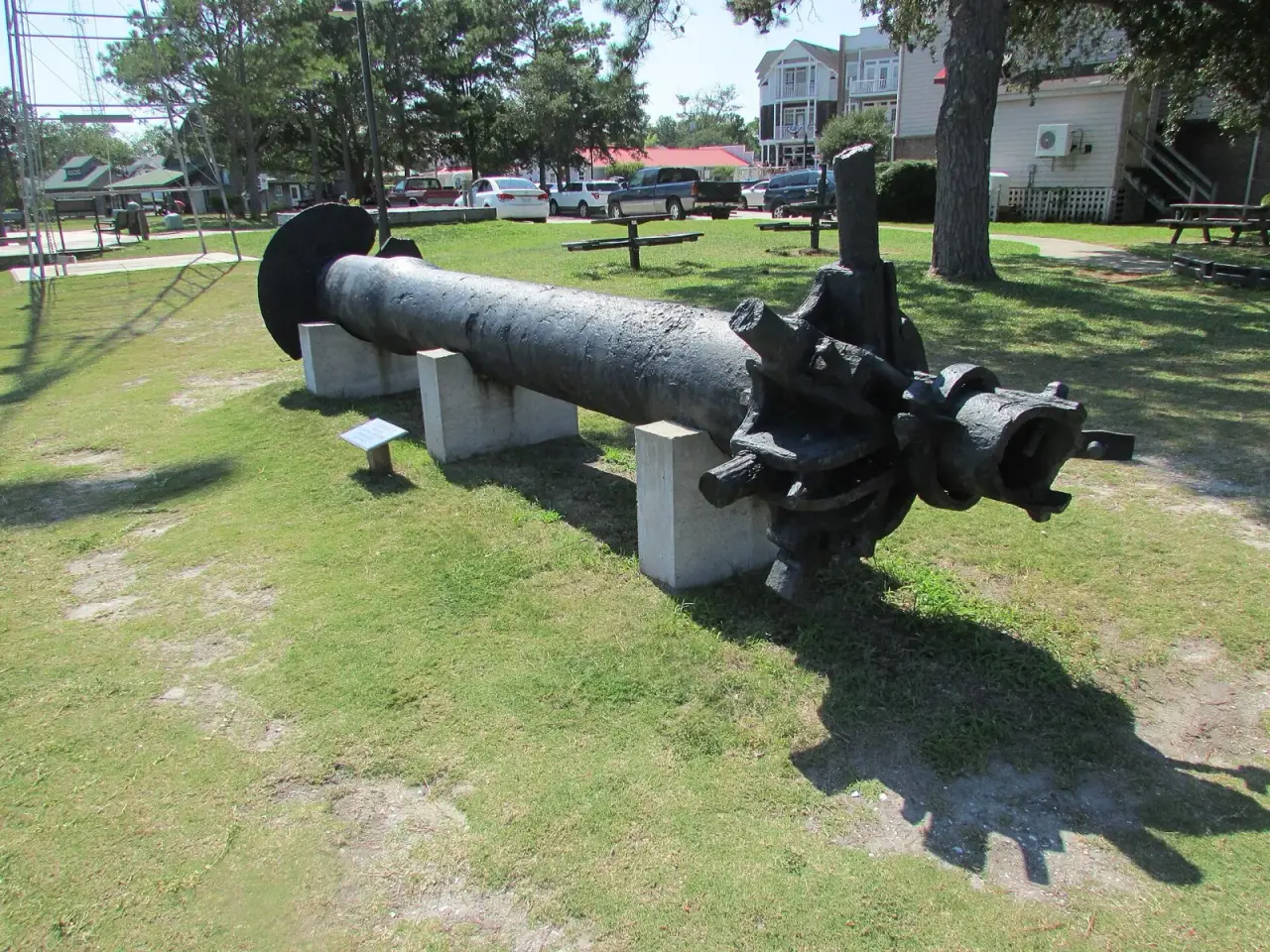
Screw piles have a long track record in rough conditions. The one above held up the Roanoke Marshes Lighthouse in North Carolina’s sounds; the light was first lit in 1877 and deactivated in 1955 (U.S. Coast Guard History Program).
Where helical piles actually corrode
Corrosion needs oxygen and water. Deep, undisturbed soil has very little oxygen, and that’s where the helix plates sit. The Chance manual quotes the National Bureau of Standards research on steel piling (Romanoff, NBS Monograph 127, 1972), which found that steel piles driven into undisturbed soil weren’t appreciably affected by corrosion, because undisturbed soil a few feet down, or below the water table, is too short of oxygen. Soils that were severely corrosive to steel buried in backfilled trenches were not corrosive to piling driven into undisturbed ground.
So the weak spots are predictable:
- The top few feet in fill. Disturbed soil has more oxygen and holds more water. The manual says the top-most extension merits corrosion protection and that the worst attack tends to happen on the shaft just below the disturbed layer.
- The waterline. Where the shaft passes through a water table that rises and falls, the changing level draws in oxygen. The manual calls the attack there not serious, but aggravated by a fluctuating water table.
- Just under the concrete cap. Steel inside the alkaline concrete is protected, which makes the short section just outside the concrete the place where any attack concentrates.
That’s useful on a new build. Many new lots are graded with cut and fill, and the top of every pile passes through whatever the grading left behind.
Soil conditions that shorten pile life
The American Galvanizers Association lists the soil variables that drive zinc corrosion: aeration, moisture and time of wetness, pH, temperature, resistivity, chloride content and particle size. It notes that galvanized steel performs best in neutral or slightly basic soils, that very low pH is linked to extreme corrosion and deep pitting, that chlorides above 20 ppm count as high, and that corrosion rates doubled in tests when temperature rose from 40°F to 68°F. In good conditions, zinc loss is likely below 5 microns (0.2 mil) per year (AGA).
Resistivity is the single biggest variable, according to the Chance manual. Wet clays that hold water tend to have low resistivity and be corrosive; free-draining sands tend not to be. The manual’s resistivity guide:
| Soil resistivity (ohm-cm) | Corrosion potential |
|---|---|
| 0 to 2,000 | Severe |
| 2,000 to 10,000 | Moderate |
| 10,000 to 30,000 | Mild |
| Above 30,000 | Unlikely |
The manual also reproduces FHWA criteria for “mildly corrosive” ground: resistivity above 3,000 ohm-cm, pH between 5 and 10, sulfates at 200 ppm, chlorides at 100 ppm and organic content of 1 percent maximum. If any one indicator fails, FHWA treats the ground as aggressive.
Soils outside the standard
AC358 doesn’t cover some conditions at all. Ground with resistivity below 1,000 ohm-cm, pH below 5.5, high organic content, sulfates above 1,000 ppm, landfill, or mine waste is outside its scope (AC358, Section 1.2.2). That doesn’t automatically rule out helical piles, but it means the engineer has to design corrosion protection for that site rather than relying on the standard rating. Old mining areas in the Colorado foothills and any lot built on fill are worth asking about.
Galvanized vs bare steel vs powder coat
For permanent structures, galvanized is the usual choice, and AC358’s table shows why: it gets the smallest sacrificial thickness. Powder coat counts for at most 16 years, after which the steel underneath is treated as bare. Bare steel carries the largest deduction, which a heavier shaft can absorb on a temporary or low-risk job.
Where soil is aggressive or there are stray currents, the Chance manual says active protection such as sacrificial anodes is used. Stray current comes from things like buried pipelines with cathodic protection and DC rail lines, and it’s a site-specific engineering question.
One more detail that matters on new construction: the Chance evaluation report requires helical pile components to be galvanically isolated from the concrete reinforcing steel and other metal building components (ICC-ES ESR-2794, Section 4.2.5). That’s a detail for the engineer and the concrete crew, and it’s worth confirming on the cap drawings.
What to ask for in the submittal
If you’re the owner, builder or engineer on a new project, these are the items that decide service life:
- A soils report that includes resistivity, pH, sulfates and chlorides at the pile locations, plus groundwater depth. Our post on soil testing before building a new home covers what the geotechnical report includes.
- Confirmation that the soil results fall inside AC358’s scope, or a site-specific corrosion design if they don’t.
- The product’s current ICC-ES evaluation report, showing the capacities include the 50-year corrosion allowance.
- The coating specified (galvanized to the ASTM standard named in the report, powder-coated or bare) and why.
- A note on fill depth at each pile and whether the upper extension needs extra protection.
- The cap detail, including galvanic isolation from rebar.
- For sites near pipelines or DC transit, a stray-current review.
None of this adds much cost on a normal lot. It mostly means asking the geotechnical engineer to run a few extra tests on samples they’re already taking.
Talk to us about your project
Site Safe Helical Piers installs galvanized helical piles for new homes, additions, decks and commercial work across Denver and the Colorado Front Range. We build to your engineer’s specification and provide the installation records. To talk through a project, call 970-673-5615 or contact us. For budgeting, see our guide to helical pile costs, and our services page for project types.